
Last updated on June 10th, 2024
In the heart of every modern home lies the challenge of crafting seamless spaces that flow effortlessly into one another, particularly when it comes to the living and dining areas. Gone are the days of rigid room divisions; today’s urban homes revel in open-plan layouts that breathe life and spaciousness into every corner. But here’s the kicker – how do we keep our open spaces feeling cohesive yet distinctly separate when needed?
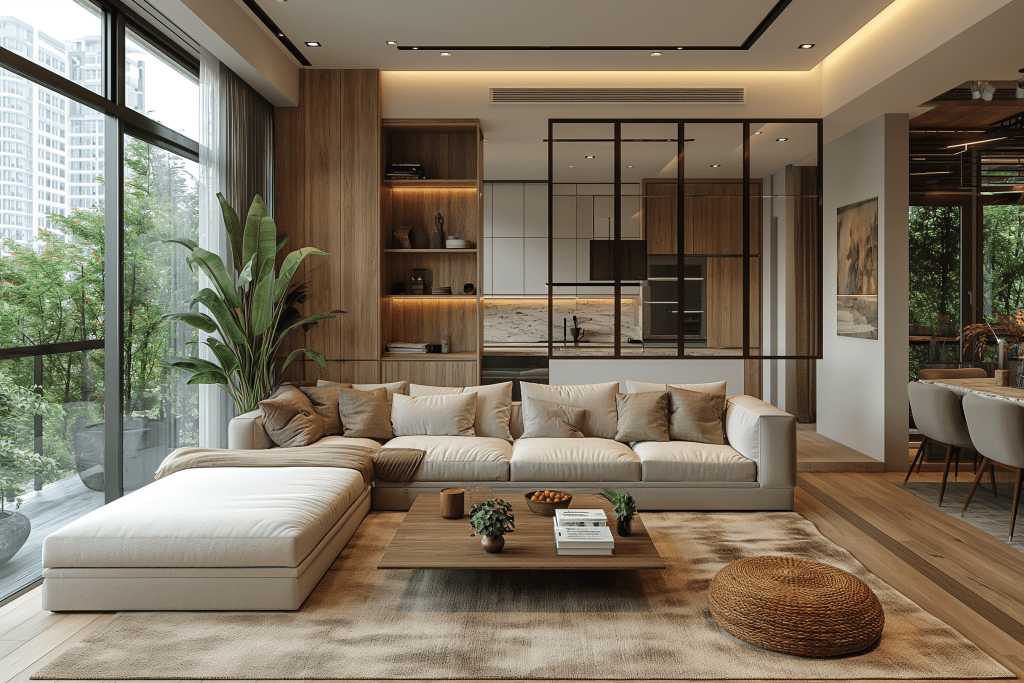
Fear not, for we’re about to take you through a journey of clever design hacks that promise not just to separate but elevate your living and dining areas, all while keeping that beloved open feel intact.
1. Strategic Furniture Placement

The placement of furniture plays a pivotal role in defining spaces. An L-shaped sofa or sectional can effectively separate the living area from the dining space, serving as a stylish yet functional barrier. Similarly, reorienting your dining table can further enhance this distinction, ensuring each zone maintains its unique character while contributing to the overall coherence of the space.
Adding an area rug under the dining table can further enhance the division, subtly signaling a different zone within the same open space. This not only defines the dining area but also adds a layer of coziness and style.
Incorporate Designer Principles For Dining Room Furniture to achieve a balanced look that complements your newly defined zones.
Need to refresh your interiors?
2. Lattice Screen Elegance
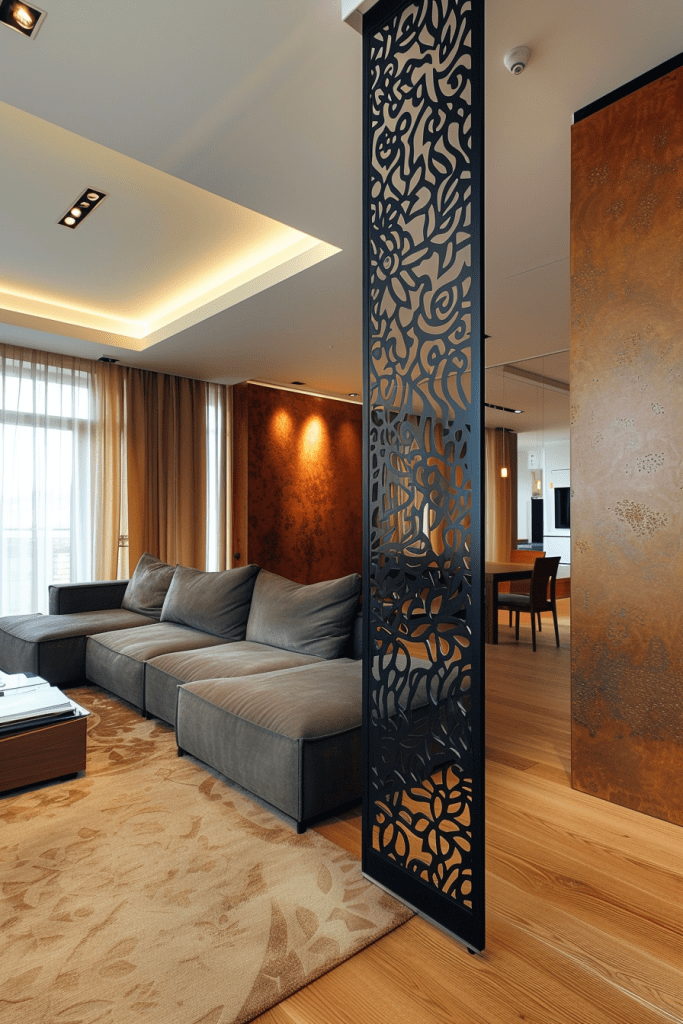
A lattice screen, or jali, crafted from wood, metal, or stone, offers an aesthetically pleasing solution to demarcate living and dining areas. Not only does it introduce an element of privacy, but its design also allows for light filtration, maintaining the open, airy feel of the space. Vertical slats, in particular, can enhance this effect, adding to the decor’s elegance and spatial depth.
Consider integrating lighting within or around your lattice screen to illuminate its beautiful pattern, adding an enchanting play of light and shadows to both your living and dining areas. This not only serves as a division but also as a stunning visual feature that captures attention.
3. Creative Dividers

From multifunctional cabinets that double as TV and crockery units to sleek glass partitions and curtains, dividers offer versatile options for separating spaces. These elements not only serve a practical purpose but also add to your home’s aesthetic appeal, providing opportunities to display art, books, or even integrate a cozy bar cabinet for an added touch of luxury.
Placing indoor plants on or near your divider can breathe life into the space, creating a natural barrier that’s both beautiful and beneficial for your home’s air quality. This green touch adds vibrancy and a sense of freshness, blending seamlessly with the decor.
Interiors on your mind?
4. Statement Lighting

Distinctive lighting fixtures, such as pendant lights or chandeliers, can visually anchor each area, creating natural divisions between the living and dining spaces. Creative ceiling designs further accentuate this separation, drawing the eye and delineating zones through architectural details.
Layering your lighting by adding floor lamps or wall sconces in the living area can create a cozier atmosphere, distinguishing it from the brighter, more task-oriented lighting of the dining space. This creates zones not just visually but through the ambiance as well.
5. The Charm of Carpets and Rugs
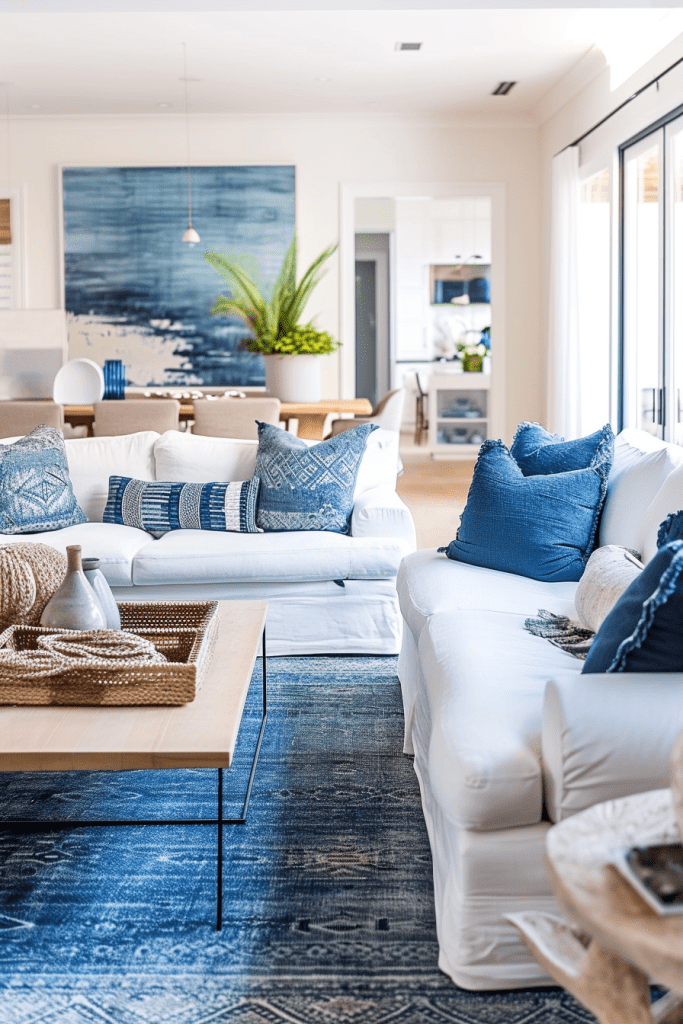
Carpets and rugs not only add warmth and texture to your decor but also serve as natural delineators between different functional areas. Selecting a distinctive rug for the living area can create a soft boundary that defines the space without the need for physical barriers.
Choosing a carpet with a contrasting texture or pattern from the dining chairs or table can further delineate the living area, making each zone feel distinct yet part of a cohesive whole.
Discover Refreshing Ways To Style Your Small Dining Area, enhancing the distinctiveness of each zone.
6. Accent Wall Intrigue

Designing an accent wall within the living area can draw attention and establish a visual division. Through color, wallpaper, or wall art, this design choice highlights the living space, subtly differentiating it from the dining area without sacrificing the openness of the layout.
This accent wall can also serve as a backdrop for a signature piece of furniture or artwork in the living area, making it a focal point that naturally draws the eye and underscores the separation between the living and dining zones.
7. Distinctive Flooring Design
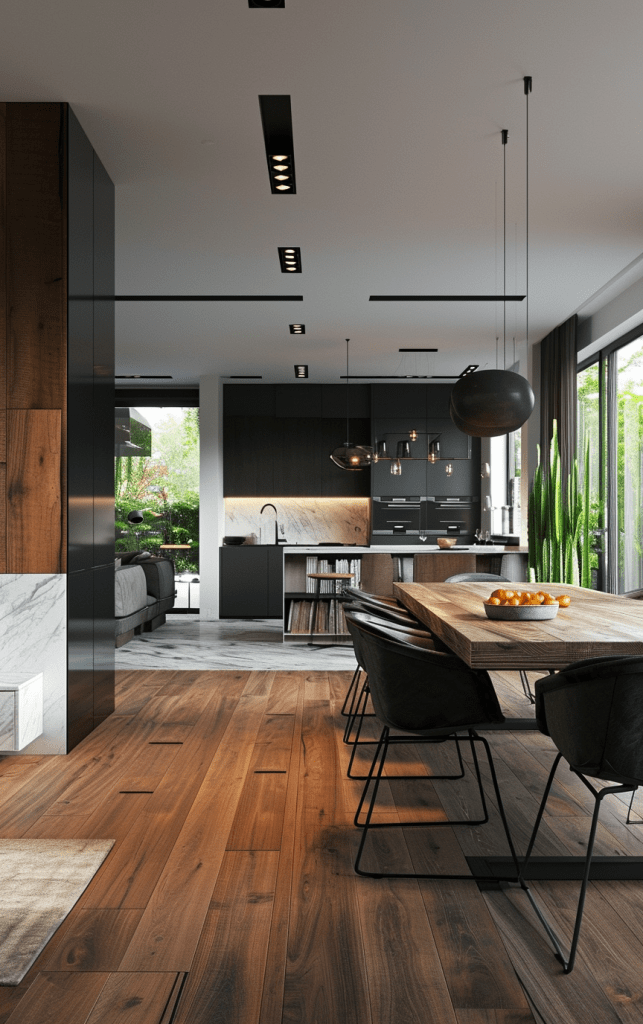
Using varied flooring materials or designs can ingeniously separate the living and dining zones. Whether it’s a transition from tiles to wood or incorporating different tile patterns, this approach offers a subtle yet effective means of zoning without disrupting the visual flow of the open-plan layout.
Incorporating a subtle transition, such as a raised threshold or a change in texture between the two flooring materials, can further define the separation without interrupting the flow of the open-plan layout.
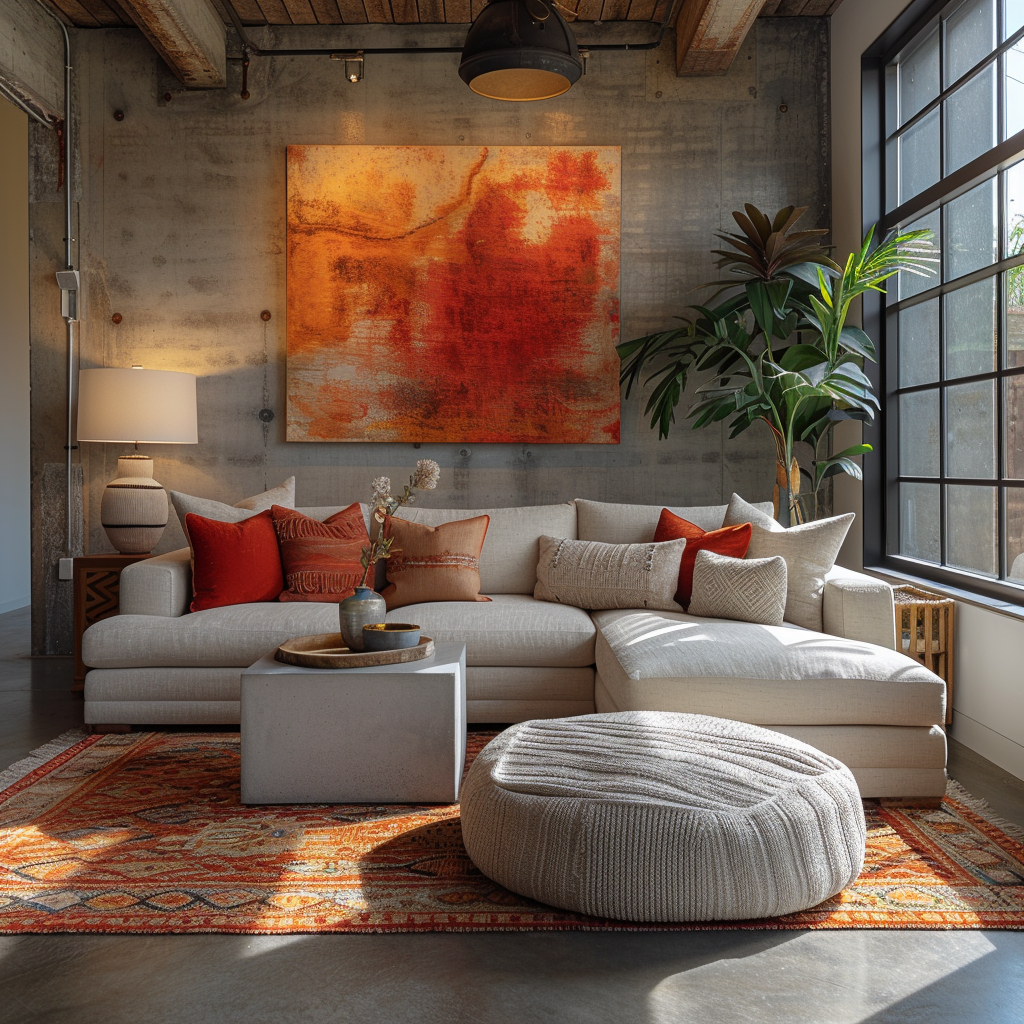
By thoughtfully incorporating these design elements, you can create distinct living and dining areas that boast both functionality and style. Remember, the key to a beautifully separated space lies in the details – from the strategic placement of furniture to the clever use of lighting and textures.
Hungry for more ingenious design tips and decor inspirations? Head over to the Homebliss blog. Whether you’re looking to refresh your dining area or seeking ways to style your open-plan living space, our treasure trove of articles is brimming with ideas to inspire your next home project. Visit us at Homebliss for your daily dose of home decor magic, where we turn design dilemmas into delightful spaces.


