


Last updated on December 25th, 2025
If there’s one thing every Indian kitchen has in common, it’s the mysterious sticky film that builds up on cabinets over time. Even if you clean regularly, a thin layer of oil, steam, dust, and cooking residue slowly settles on your cabinet doors — especially around handles, hinges, and corners. Suddenly, knobs feel tacky, wooden shutters look cloudy, and glass cabinets lose their sparkle.

The good news? You don’t need fancy chemicals or expensive sprays. With a few everyday ingredients and the right technique, you can cut through grease quickly— no matter what your cabinets are made of.
Let’s get straight to the trick.
Looking to get your interiors done?
Why Cabinets Become Sticky (Even When You Clean Your Kitchen Often)

Cooking releases tiny oil droplets and steam into the air. These droplets cling to nearby surfaces — upper cabinets, hardware, tiles, the chimney hood, and anything surrounding your stove. Over weeks, dust sticks to this oily layer, turning into that stubborn, sticky film we all dread.
The materials most affected?
– Wood cabinets
– Laminate and acrylic finishes
– Glass-front cabinets
– Ceramic-tiled surfaces
– Metal hardware
So the trick is using a cleaner that cuts through grease without damaging the finish beneath.
Interiors in need of an upgrade?
The Instant De-Greasing Trick (Safe for Every Cabinet Surface)

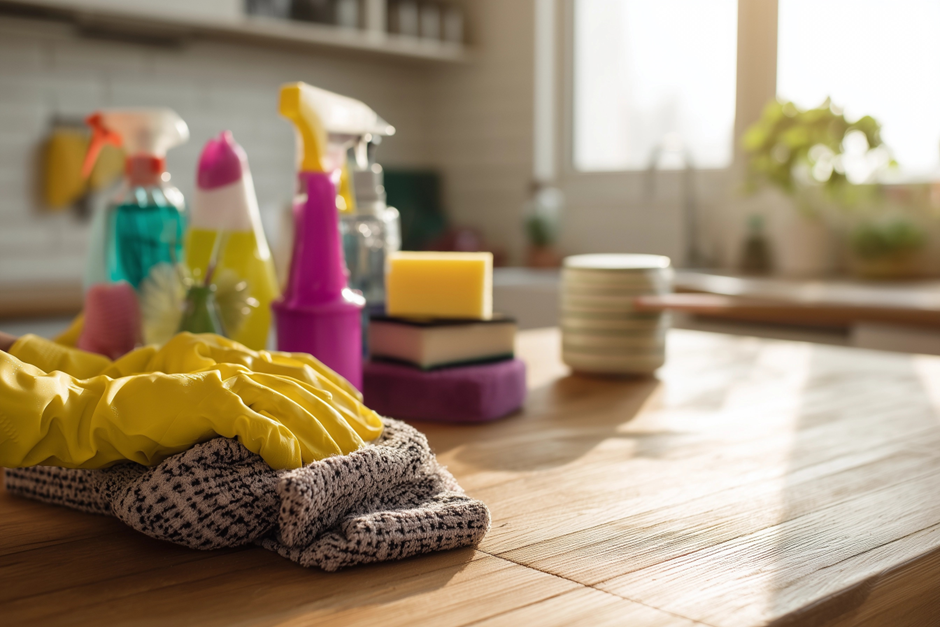
This method is gentle enough for wood but strong enough to cut through old, sticky buildup. You only need three common ingredients.
You’ll Need:
– Dish soap (mild, liquid)
– White vinegar
– Warm water
– Microfiber cloths
– A soft sponge
Step 1: Start With Soapy Water
Mix a few drops of dish soap in a bowl of warm water. Dip a microfiber cloth, wring it well (it should not drip), and wipe the cabinets.
Dish soap breaks down the outer oily layer so the vinegar solution works more effectively.
Step 2: Use a Vinegar Rinse for Deep Cleaning
Mix equal parts white vinegar and warm water.
For wood finishes, dilute it further (1 part vinegar to 3 parts water).
Spray lightly or apply using a cloth. Let it sit for a minute, then wipe.
Vinegar is a natural degreaser — it dissolves grime without harming paint, laminate, or glass.
Step 3: Work Around Edges & Hardware
The stickiest areas?
– Around cabinet handles
– Beneath the lower edge of wall units
– Corners of glass shutters
Dip your cloth into the vinegar mix and wipe slowly with a soft sponge without scratching.
Step 4: Always Dry Immediately
Whatever your cabinet material, never leave moisture sitting on the surface.
Use a dry microfiber cloth to buff the area. The shine returns instantly.
What About Stubborn Buildup? Try This Gentle Add-On
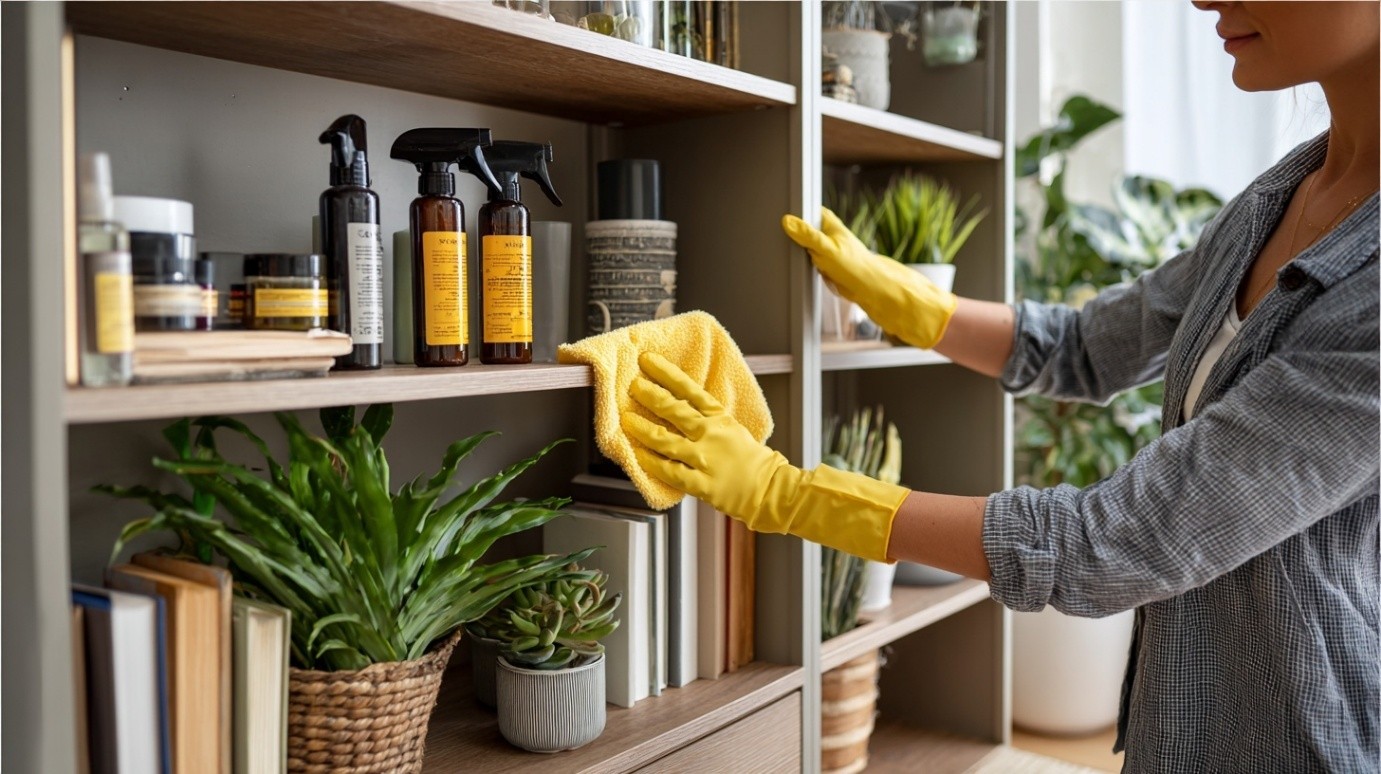
If the grease has been sitting for months (or years — no judgment!), mix a tiny bit of baking soda with water to form a mild paste.
Apply, wait two minutes, wipe gently, then rinse with a damp cloth.
Important:
Use this only on laminate, ceramic, metal, or glass — avoid on pure wood.
How to Clean Different Cabinet Materials Safely
#1 Wood Cabinets

– Never soak or overspray
– Dry immediately
– Avoid abrasive scrubbing
– Use diluted vinegar only
#2 Laminate or Acrylic
– Use mild cleaners
– Use a soft sponge, not a scrubber
– Avoid citrus-based cleaners that dull shine
#3 Glass Cabinets
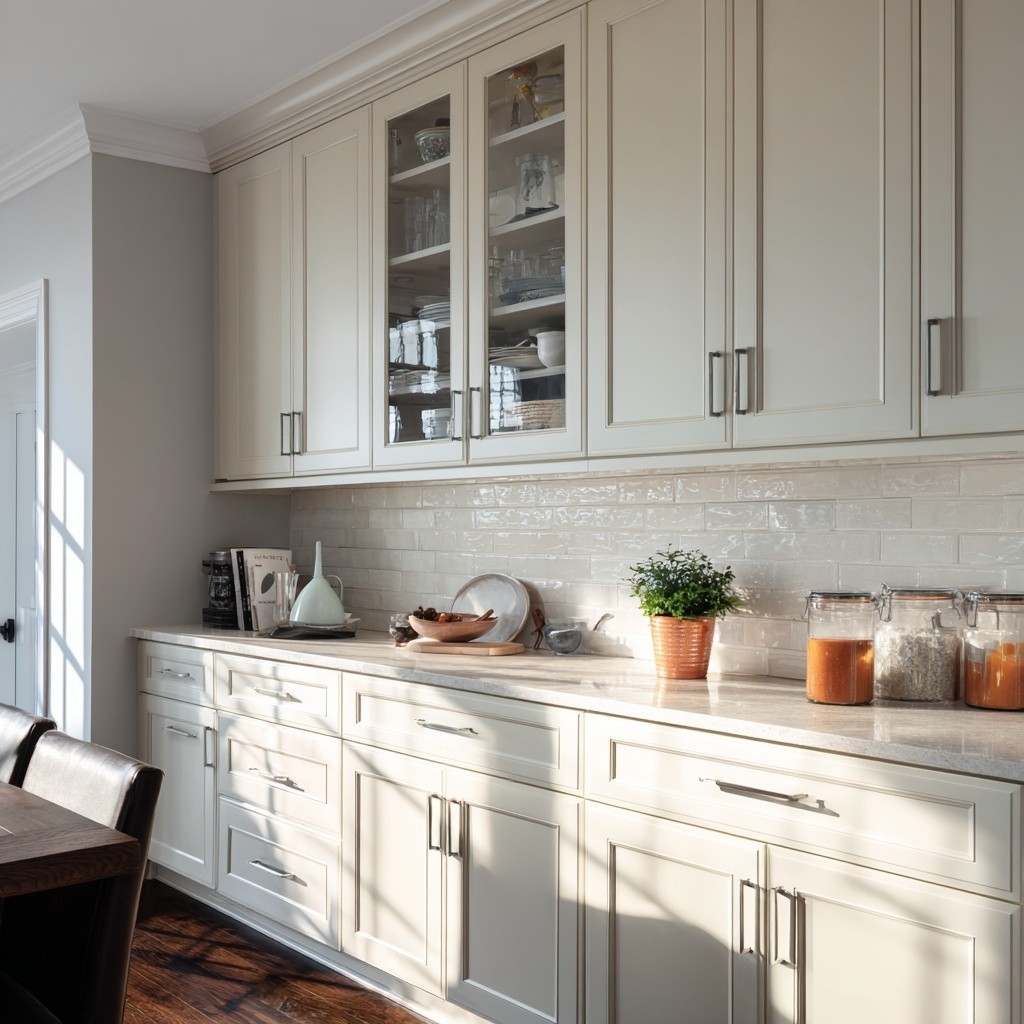
– Clean last, so oil from other surfaces doesn’t drip onto them
– Finish with a dry buff to avoid streaks
Need to refresh your interiors?
#4 Metal Handles & Hardware
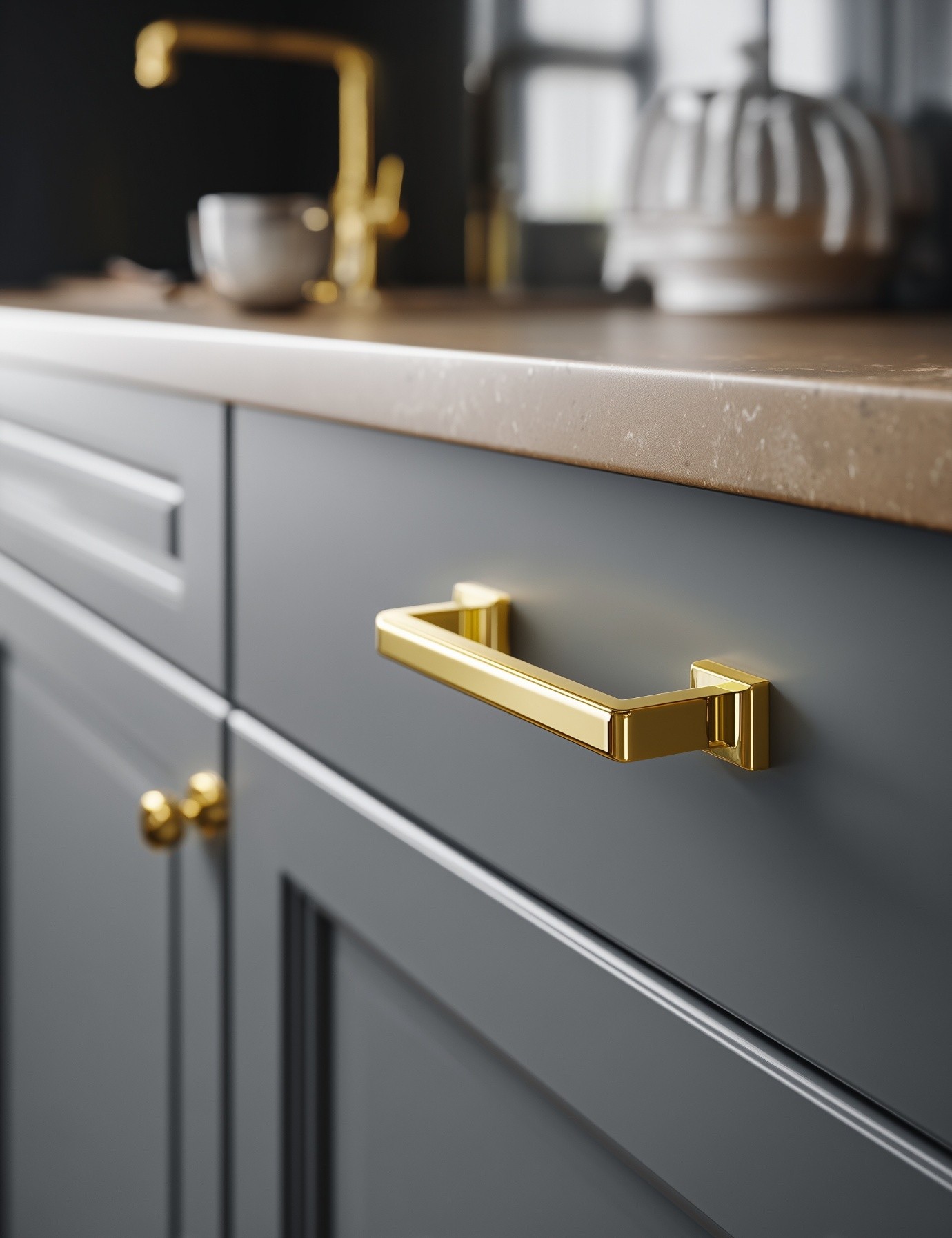
Grease loves hardware.
Remove handles if they’re extremely dirty, soak them in warm soapy water for 10 minutes, scrub lightly, rinse, and dry thoroughly before reinstalling.
How to Keep Cabinets From Getting Sticky Again

Once the deep clean is done, maintenance becomes super easy. Try these habits:
– Wipe cabinets near the stove weekly with a damp cloth
– Run the chimney on a higher speed when frying
– Avoid touching cabinets with oily hands
– Clean handles and knobs often — they collect the most grime
– Give the cabinet faces a quick monthly vinegar wipe-down
Small habits, big difference.
A Last Word

Sticky cabinets don’t mean your kitchen is “not clean enough” — they’re a natural result of everyday Indian cooking. With a simple mix of dish soap, warm water, and vinegar, you can revive wood, laminate, glass, ceramic, and metal surfaces instantly. Gentle, effective, and budget-friendly — this trick is all you need for a kitchen that looks fresh and feels amazing to work in — the HomeBliss way!