Last updated on November 2nd, 2026
Open the cabinet under your kitchen sink. What do you see? If the answer involves half-empty bottles, old sponges, plastic bags, mystery cleaning products, and something you haven’t touched since 2022, you’re in good company.
But this isn’t just an organizing problem. Under-sink cabinets are vulnerable to leaks, drips, dampness, and mold, which means they’re not suitable for storing just anything.
So, what should go under there? Let’s clear things up.
1. Start By Taking Absolutely Everything Out
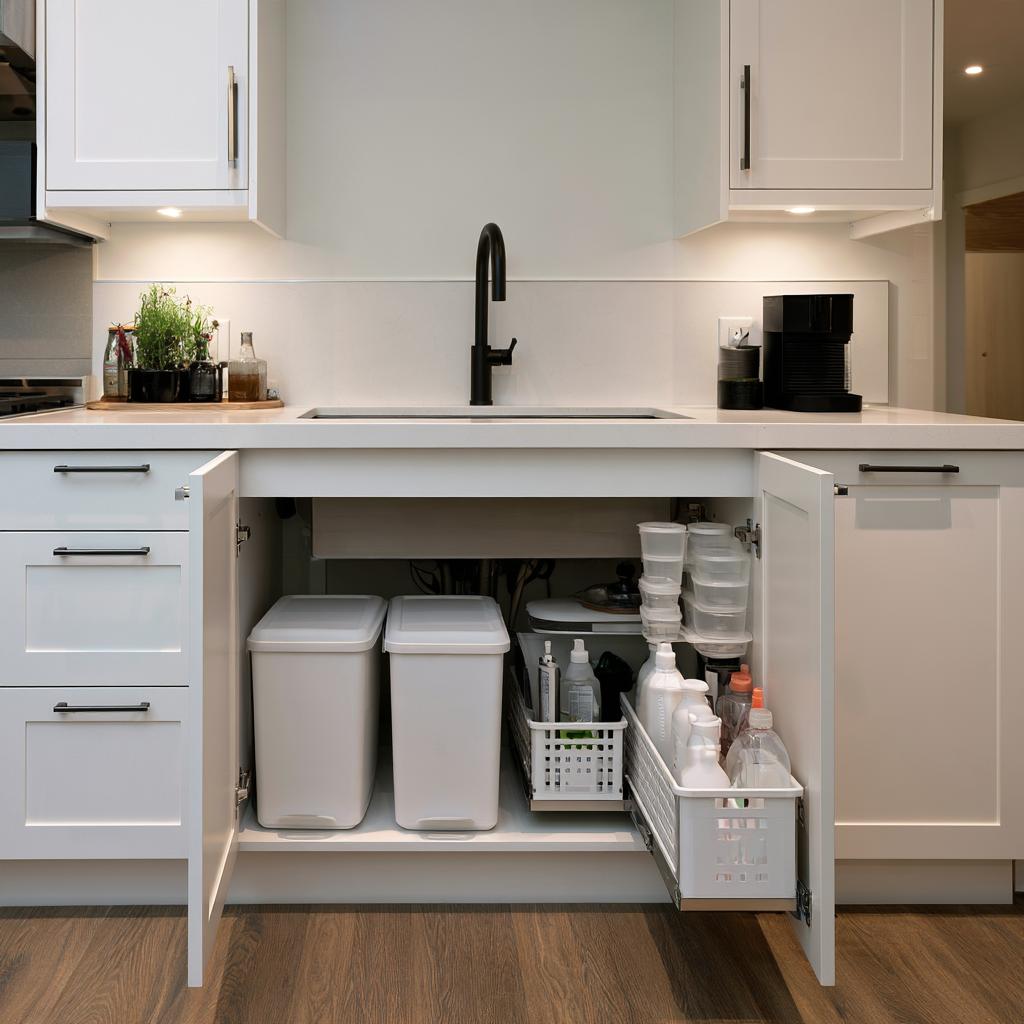
Yes, everything. You may need courage! Before reorganizing, empty the cabinet and check for damp patches, plumbing leaks, stains, or signs of mold.
Wipe the area thoroughly and let it dry before putting anything back. It’s worth repeating this check regularly, especially if the cabinet tends to smell musty.
And while everything is out, dispose of empty bottles, worn-out sponges, and products you never use.
2. Keep Food Somewhere Else
Under the sink is not a mini pantry! Even if you’ve run out of cabinet space, resist the temptation to store packaged food beneath the sink.
A leak can quickly damage cardboard boxes, paper packaging, and food containers. This area can also be more humid than regular kitchen cabinets. Keep food in a dry pantry or kitchen cabinet instead.
3. Be Selective About Cleaning Products

Don’t move the entire cleaning aisle under there! It may seem like the obvious home for cleaning supplies, but don’t automatically pile every household cleaner beneath the sink.
Keep only sturdy, well-sealed products you use frequently for the kitchen, and follow the product’s storage instructions. Anything potentially hazardous should always be kept securely away from children and pets, preferably in a locked or inaccessible location.
Move bulk refills and rarely used products elsewhere.
4. Store Sturdy Everyday Supplies

Think practical, washable, and water-resistant! The best candidates for under-sink storage are things that won’t be ruined by a little moisture.
Dishwashing brushes, rubber gloves, scrubbers, cleaning cloths, and other durable kitchen-cleaning accessories can work well here.
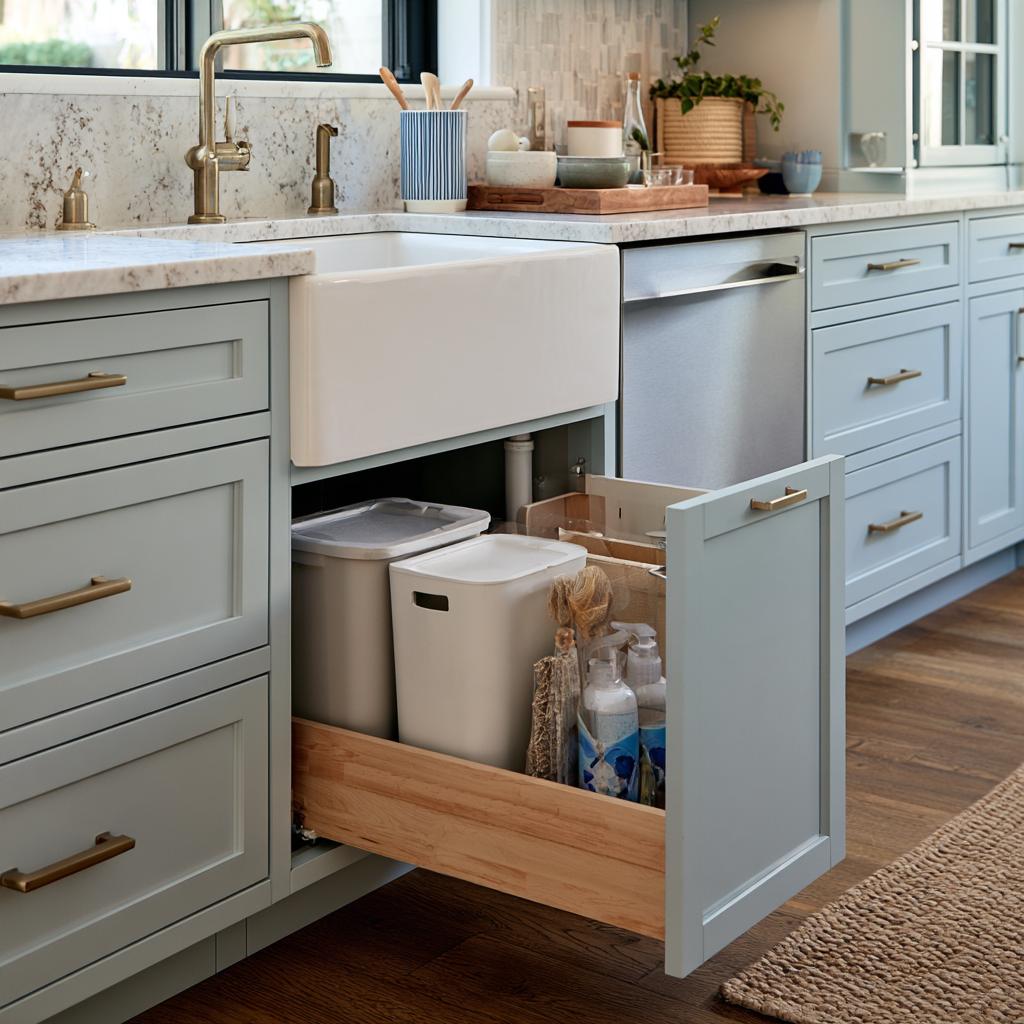
Keep them in washable plastic bins or caddies rather than placing everything directly on the cabinet floor.
5. Give Garbage Supplies A Home

Finally, somewhere sensible for those bin bags! Trash bags and recycling accessories are useful to have near the kitchen bin.
Store them inside a plastic container or mounted dispenser so they’re protected from occasional drips. If your waste bin itself fits comfortably beneath the sink without interfering with the plumbing, this can also be a convenient place for it.
6. Work Around The Plumbing

Pipes get priority! Don’t cram organizers tightly around pipes and plumbing connections. You want to be able to spot a leak quickly and give a plumber access when necessary.
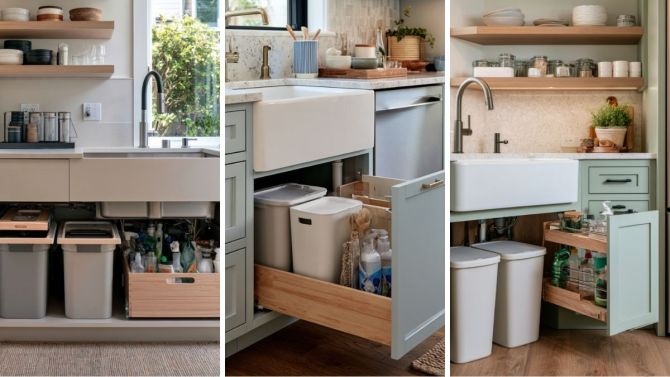
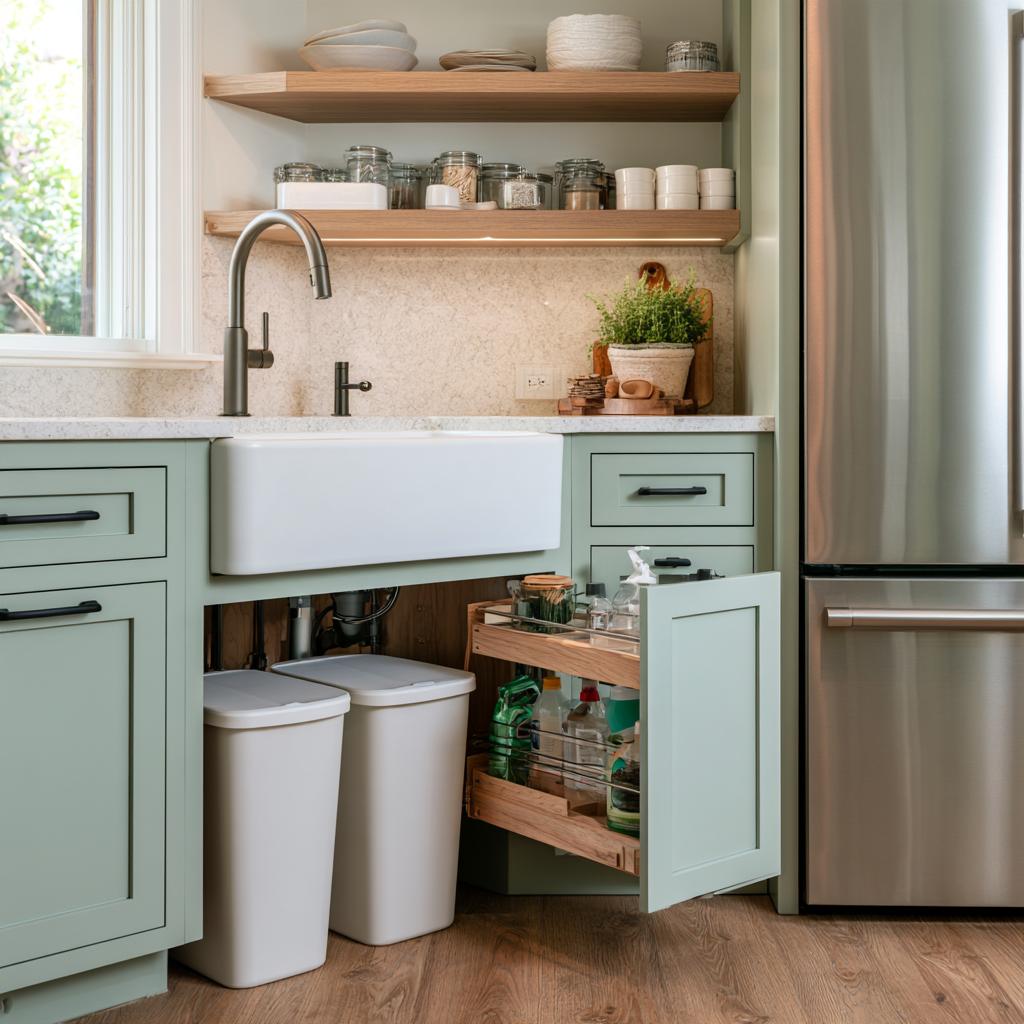
Use small removable bins, door-mounted organizers, or compact caddies instead. Avoid elaborate storage systems that make the plumbing impossible to reach. And never stack things so high that they’re pressing against pipes!
What Definitely Doesn’t Belong Here?
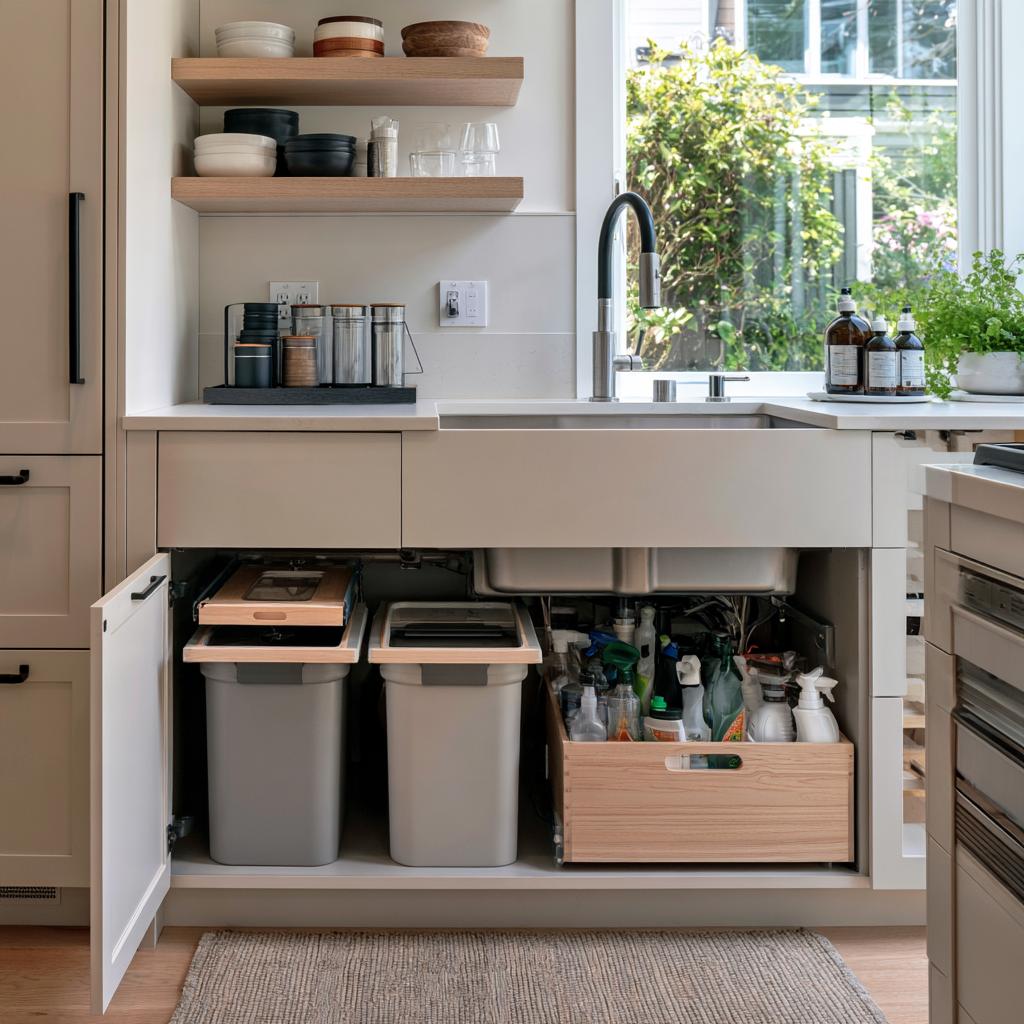
Skip food, paper goods, cardboard boxes, delicate appliances, electronics, and anything that could be badly damaged by water.
The rule is wonderfully simple: if a leak would ruin it, find another home for it.
The Under-Sink Rule To Remember
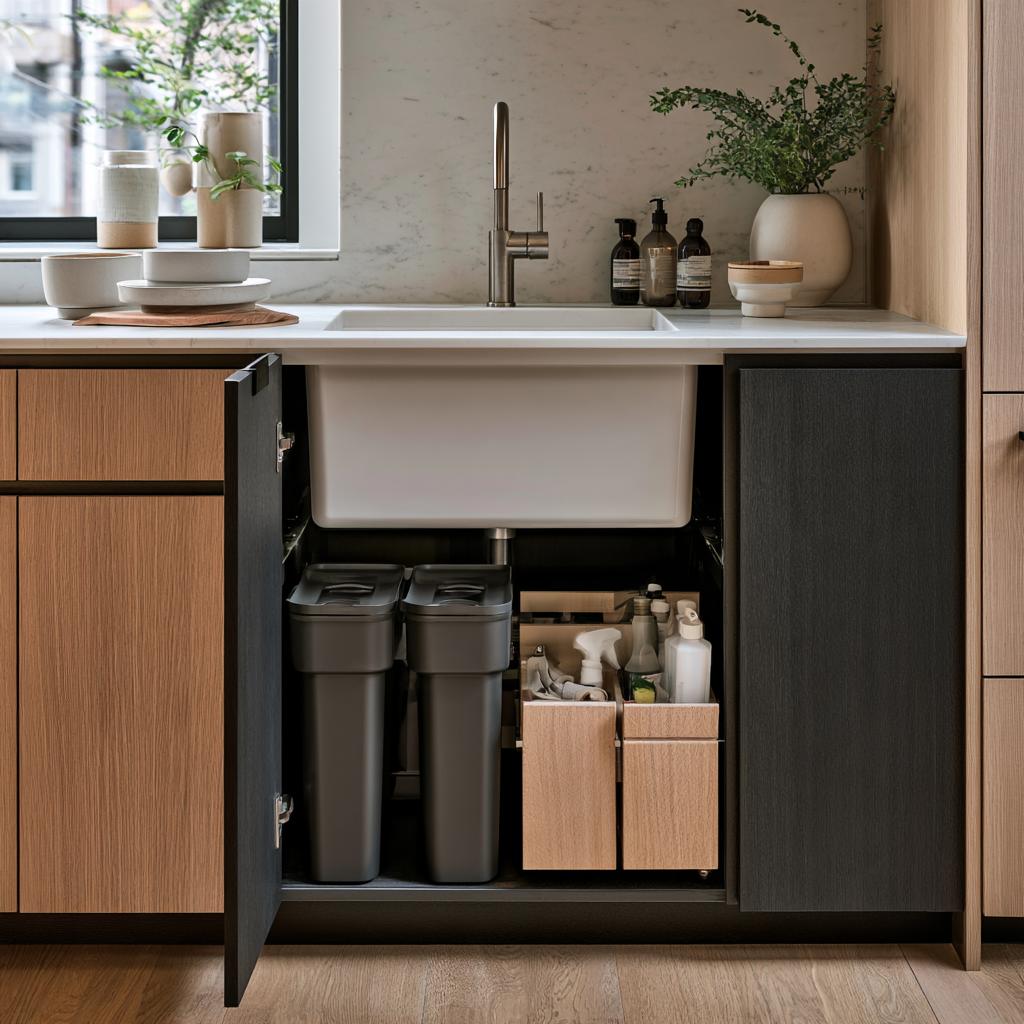
Your under-sink cabinet doesn’t have to become the kitchen’s dumping ground. Keep it lightly stocked with sturdy, frequently used, moisture-resistant essentials, leave the plumbing accessible, and regularly check for dampness.
At HomeBliss, we love turning awkward storage spots into genuinely useful ones. Keep exploring the HomeBliss blog for clever kitchen organization ideas and simple ways to keep clutter under control.


