Last updated on November 2nd, 2026
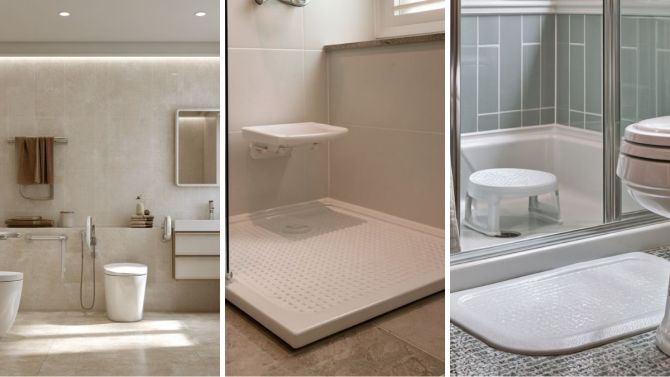
A bathroom that works perfectly well today can become surprisingly difficult to navigate as we get older. Slippery floors, low toilets, hard-to-turn taps, and nowhere to sit can turn simple daily routines into uncomfortable ones.
The good news? You don’t necessarily need a complete bathroom remodel. A few thoughtful changes can make the space safer, easier to use, and far more comfortable while supporting independence.
Here’s where to begin.
Start With The Floor

Because slippery and stylish should never be roommates! Wet bathroom floors are an obvious hazard, so flooring deserves serious attention.
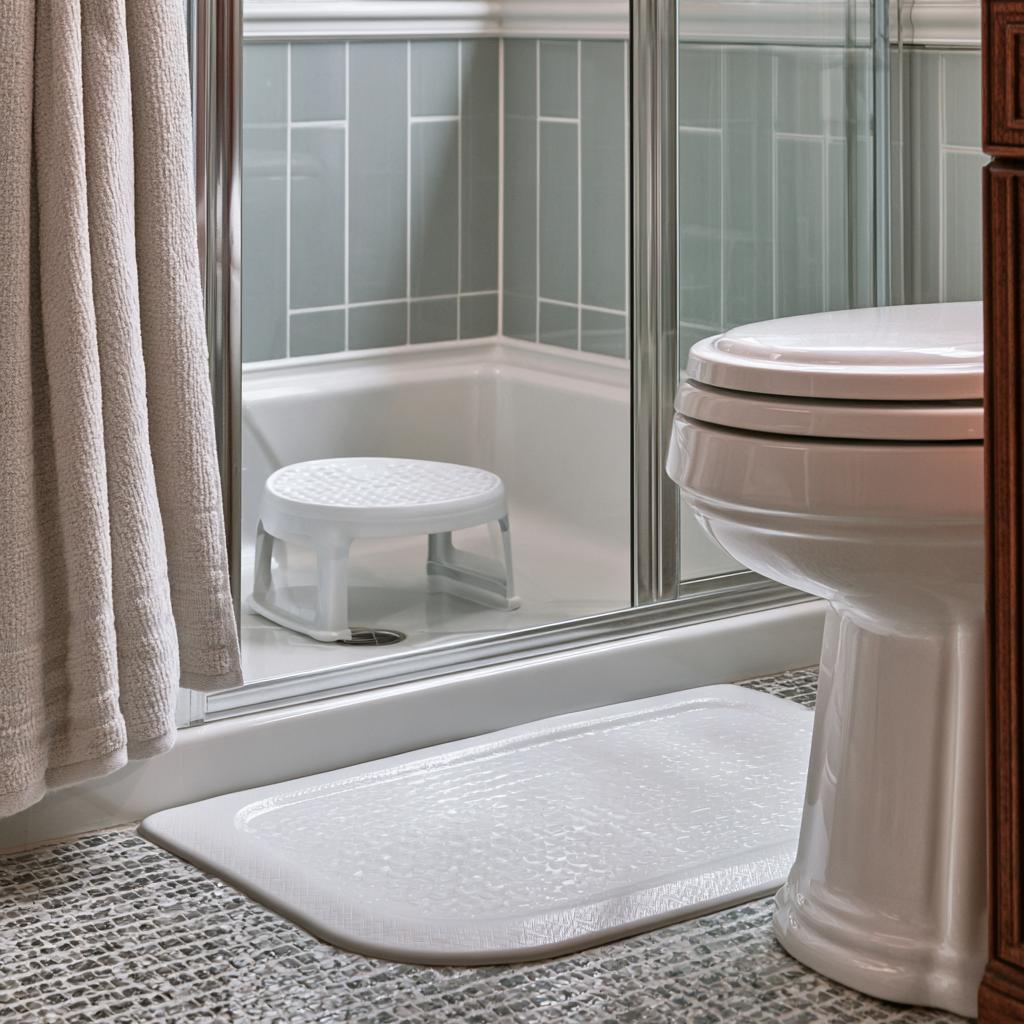
Choose an even, slip-resistant surface that provides good grip underfoot. Non-slip vitrified tiles or textured vinyl can be practical options. Avoid highly polished finishes and rugs that slide or curl at the edges.
If you’re renovating, try to minimize unnecessary changes in floor level too.
Add A Place To Sit

Sometimes you just need a breather!
A compact resting chair can be useful while dressing or waiting for the shower. Inside the shower area, a properly installed fold-down bench offers seating without permanently taking up valuable floor space.
If a built-in seat isn’t possible, choose a stable shower chair designed specifically for wet areas.
A nearby ledge or shelf can also keep soap, shampoo, and towels comfortably within reach.
Consider A Comfort-Height Toilet

A few extra inches can make a big difference! Very low toilets can be harder to sit down on and rise from, particularly for someone with limited mobility.
A comfort-height toilet can make the movement easier. If replacing the toilet isn’t practical, suitable toilet-seat raisers may be another option.
Grab bars positioned around the toilet can provide additional support, but they should be securely fixed and appropriately positioned for the person using them.
Swap Knobs For Lever Faucets
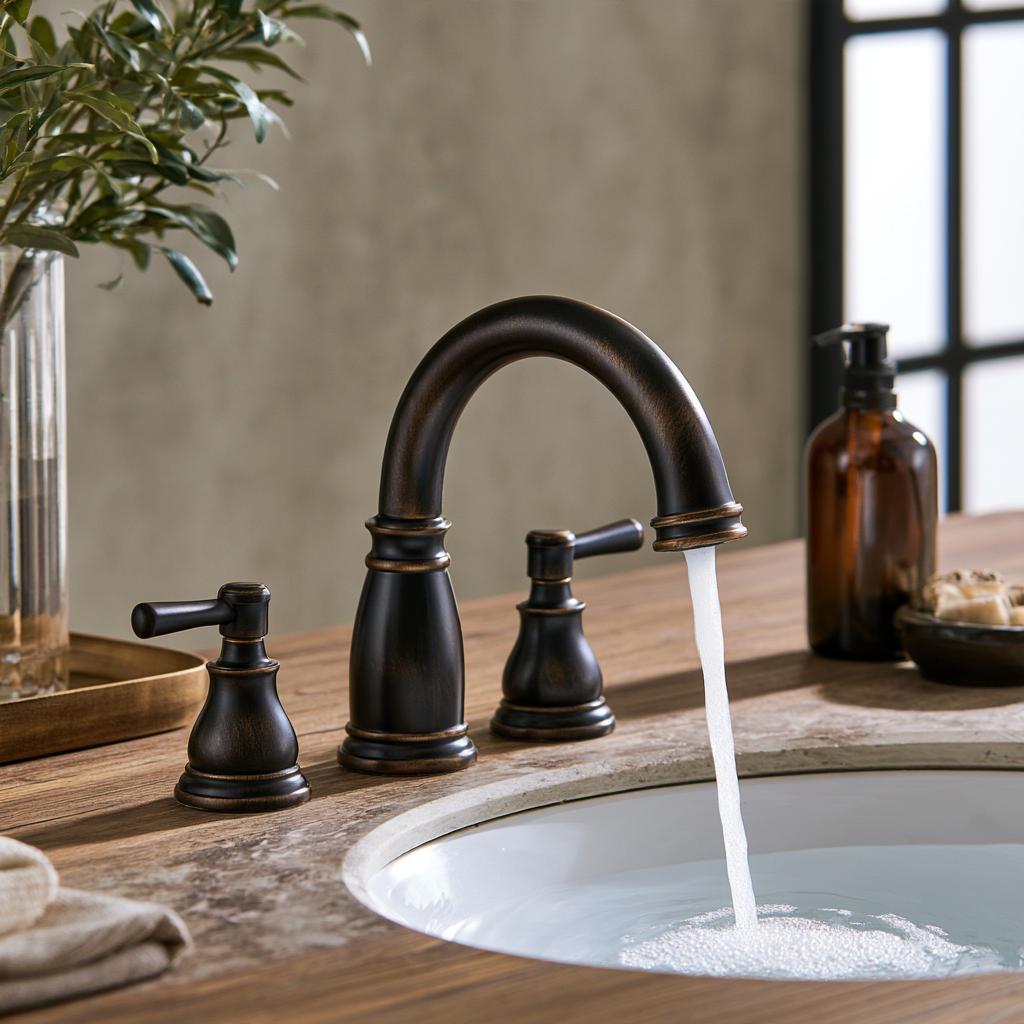
Twist less, turn on easier! Traditional round faucet knobs can be tricky for older hands, particularly when grip strength is reduced.
Lever-style faucets are generally easier to operate because they don’t require the same twisting action. Long, easy-grip handles can make things simpler still.
If you’re changing the fittings anyway, this is one small upgrade that can improve everyday usability.
Make The Shower Easier To Enter
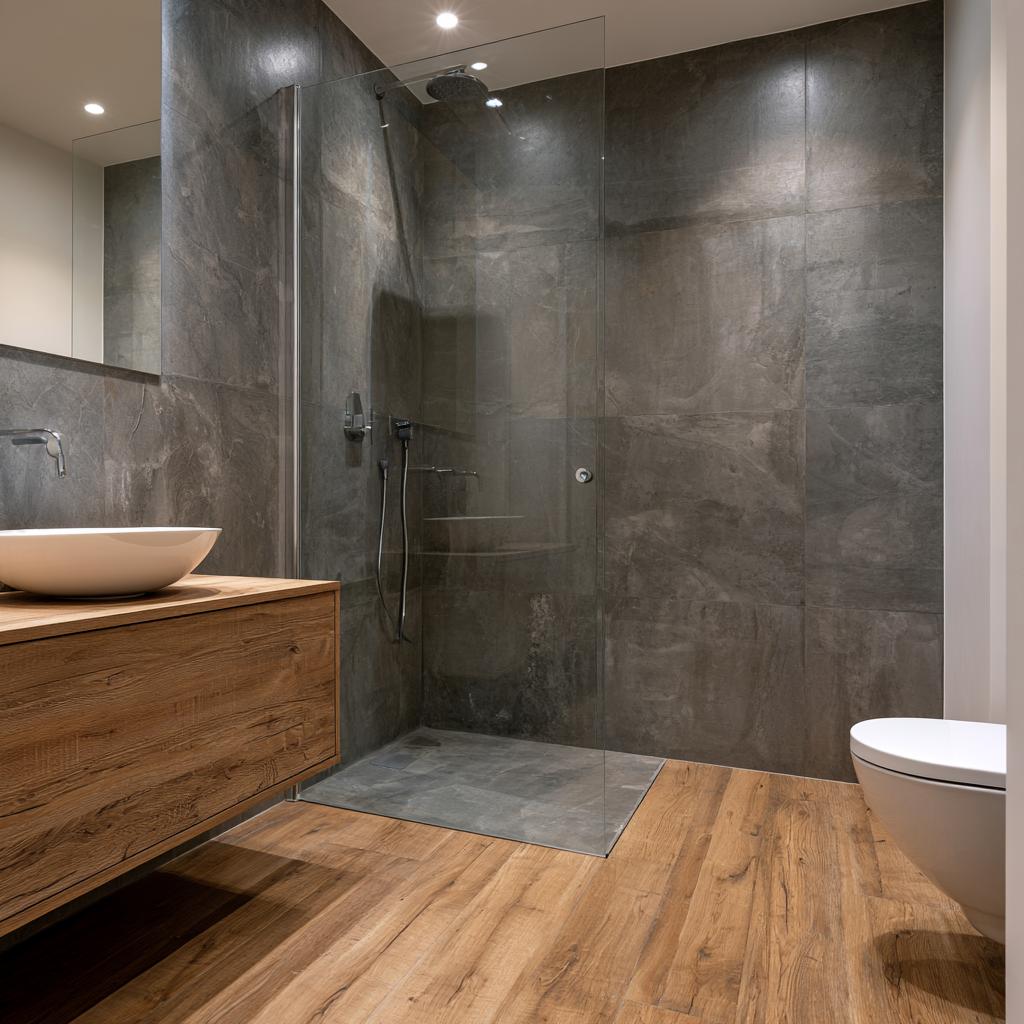
Skip the hurdle before the shower!
A high shower threshold can become difficult to step over. If you’re remodeling, consider a level-entry or low-threshold shower.
A handheld showerhead can also make bathing easier, especially when used with a shower seat. Keep toiletries between comfortable waist and shoulder height so nobody needs to crouch down or stretch precariously.
Give The Bathroom Better Lighting
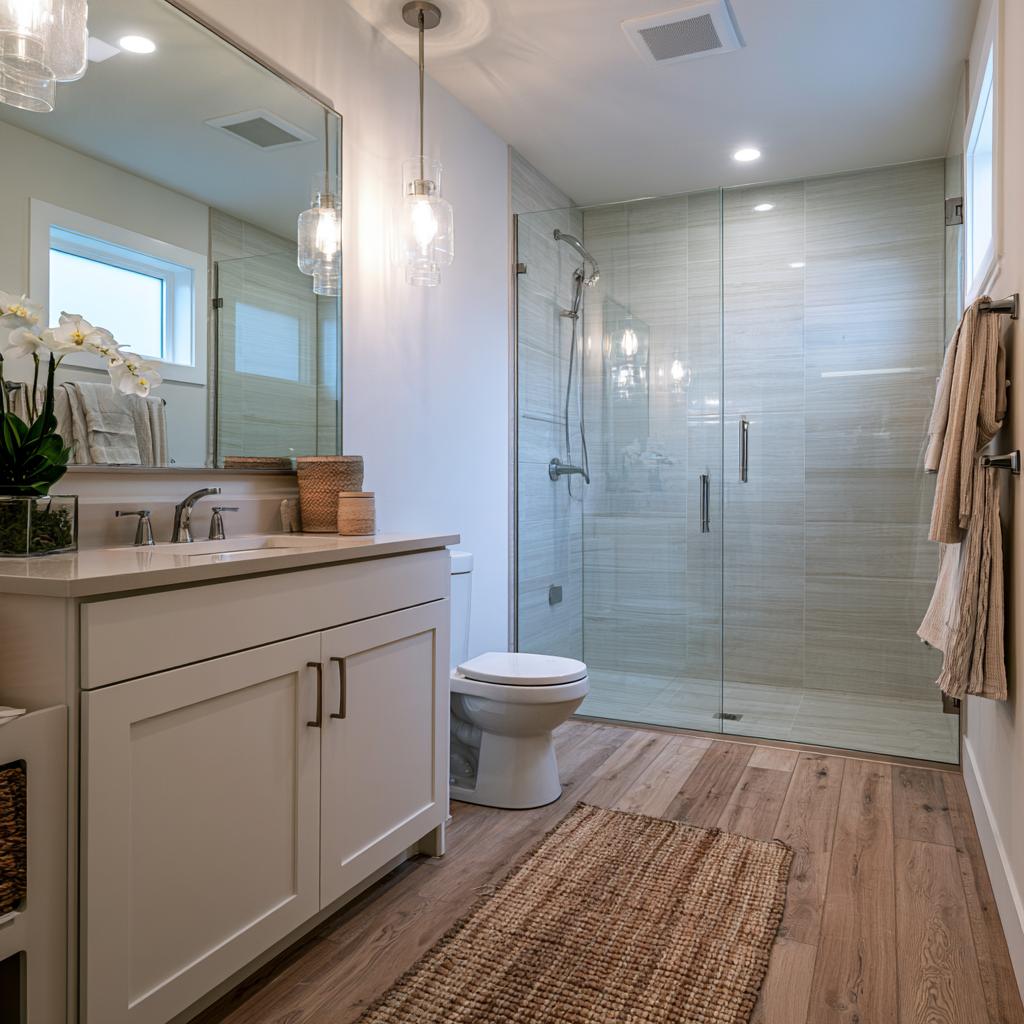
No more navigating shadows! Good visibility matters just as much as good flooring.
Make sure the bathroom is evenly illuminated, particularly around the shower, toilet, and vanity. Avoid creating dark corners or relying on a single dim ceiling fixture. A night-light can also make those middle-of-the-night bathroom visits much easier to navigate.
Keep Everyday Things Within Easy Reach
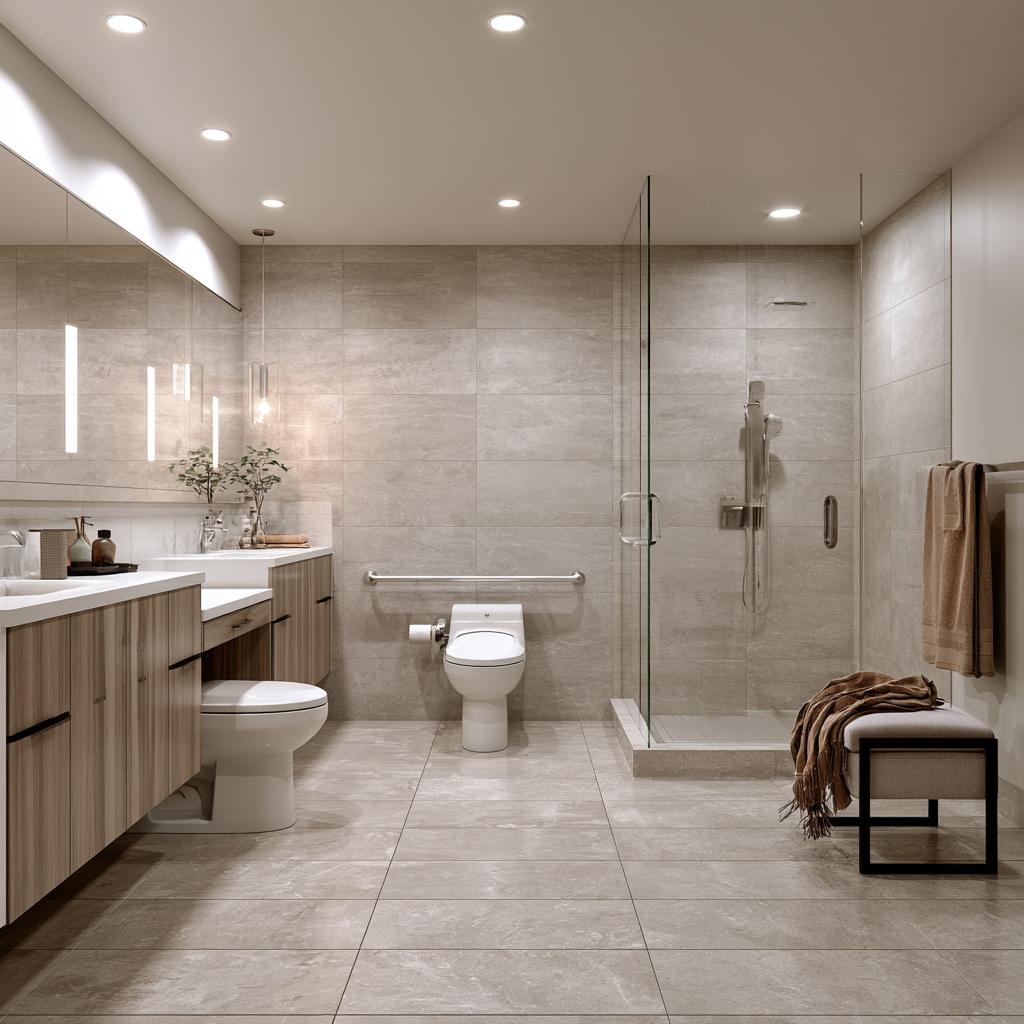
No stretching. No bending. No bathroom gymnastics! Move frequently used toiletries, towels, and personal-care items to accessible shelves and drawers.
Avoid storing everyday essentials in very high cabinets or right at floor level. Pull-out drawers, open shelves, and easy-grip handles can all make storage simpler to use.
And keep pathways clear. Decorative stools, baskets, and bath accessories aren’t worth tripping over.
Comfort First, Independence Always!

A senior-friendly bathroom doesn’t have to look clinical. The smartest changes are often barely noticeable: better flooring, comfortable seating, easier faucets, sensible storage, improved lighting, and well-planned support where it’s needed.
Individual mobility needs vary, so grab bars, seating, toilet heights, and major alterations should be planned around the person who will actually use the bathroom.
At HomeBliss, we believe good design should make everyday life easier for everyone. Keep exploring the HomeBliss blog for practical ideas that make your home safer, smarter, and more comfortable at every stage of life.


