
Last updated on January 15th, 2025
When it comes to kitchen design, the right countertop can make all the difference, both functionally and aesthetically. One design that has been turning heads in recent years is the waterfall countertop. Its sleek, modern look creates a continuous flow of material, seamlessly cascading down the sides of your kitchen island or countertop.
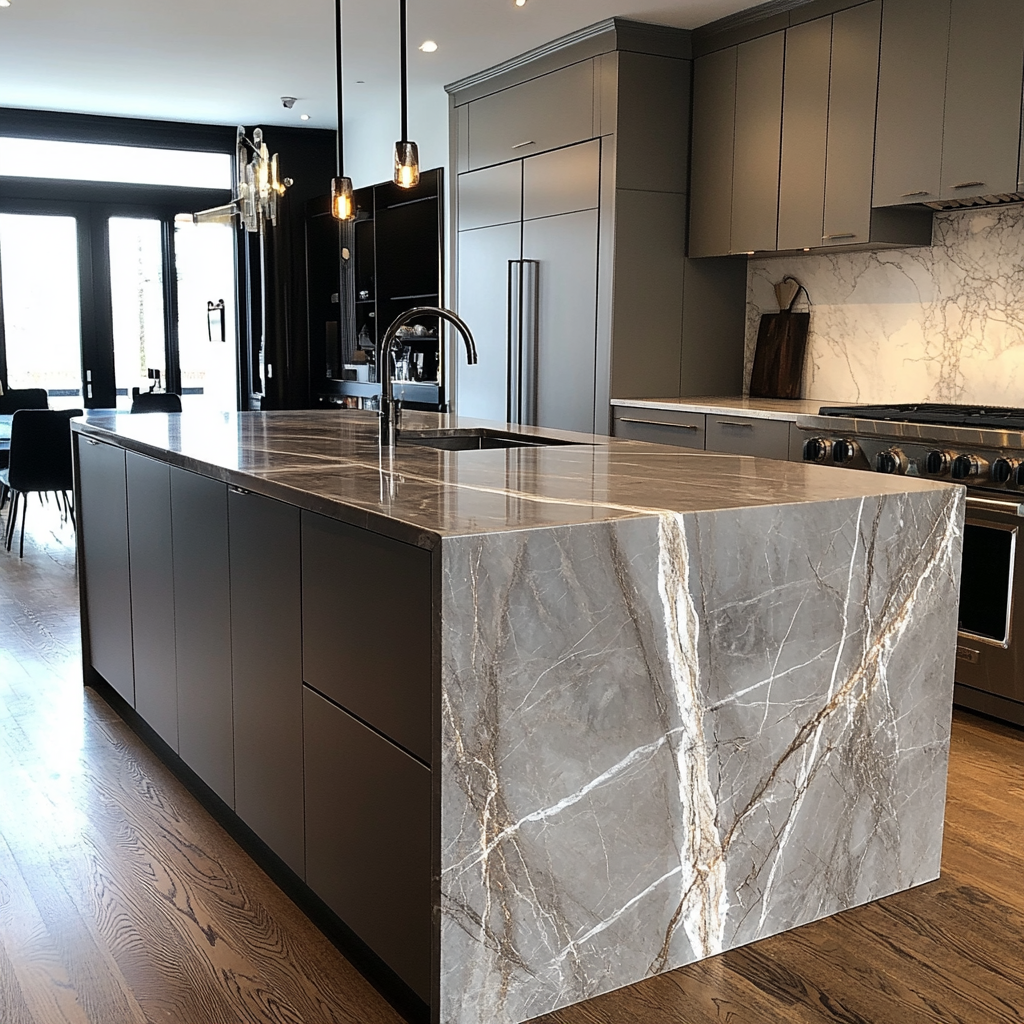
But is it the right choice for your kitchen? Let’s explore the pros, cons, and everything in between to help you decide if this design trend is worth the splurge.
Looking to get your interiors done?
What Exactly Is a Waterfall Countertop?
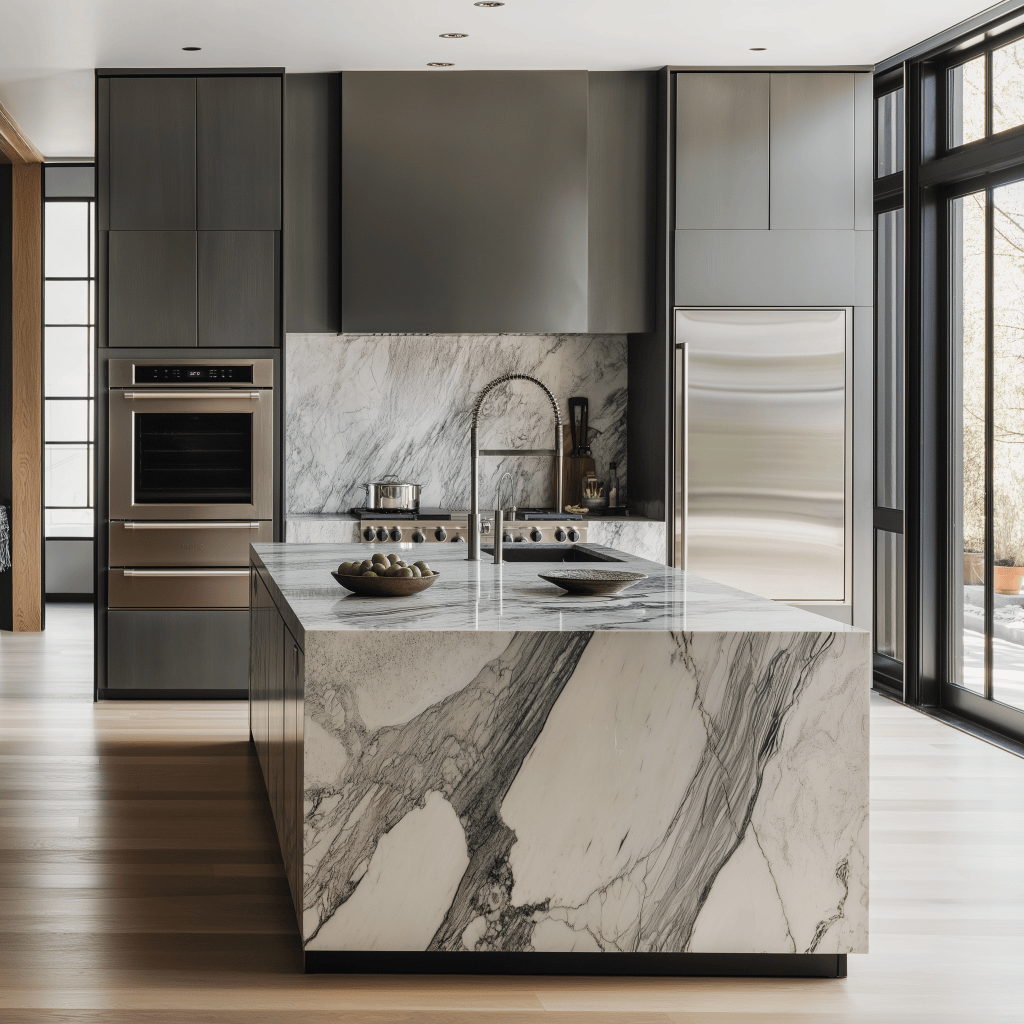
A typical countertop stops at the edge of the cabinet, but a waterfall countertop doesn’t just stop there—it keeps going. In this design, the countertop extends vertically down the sides of a cabinet or kitchen island, flowing to the floor like a waterfall. This continuous, wraparound effect gives the countertop a bold and luxurious look, perfect for modern and contemporary spaces. Waterfall countertops are precision-made, with mitered edges that create the illusion of one single piece of material wrapping around the surface.
Interiors in need of an upgrade?
Go Big or Go Subtle: Customizing Your Waterfall Design

One of the great things about waterfall countertops is that they can be customized to fit your kitchen’s layout and style. Whether you want the countertop to wrap around both sides of an island or just one, you can adjust the look based on the space you have. Some designs even incorporate asymmetry for added drama. You can also play with the length—waterfalls don’t always have to go all the way to the floor; some designs have partial drops that expose other materials or features.
Material Matters: What to Choose for Your Waterfall Countertop

Waterfall countertops can be made from a variety of materials, from quartz to natural stone, and even wood. However, the material you choose plays a big role in the final look and functionality. For example, quartz and porcelain are popular choices due to their durability and consistency in patterns, which make it easier to create a seamless look. Natural stone, on the other hand, has unique veining and patterns, but it can be harder to align, requiring more skillful fabrication.
The Pros and Cons: Is a Waterfall Countertop Right for You?

Pros:
–Elevates your kitchen’s style: Waterfall countertops are an instant attention-grabber. Their sleek, continuous design adds a sense of luxury and sophistication to any kitchen.
–Durability meets design: Not only are they beautiful, but they’re practical too. The vertical continuation of the material protects the sides of your cabinets from scuffs and scratches.
–Works with modern aesthetics: If you’re going for a contemporary or minimalist look, waterfall countertops are a perfect match.
Cons:
–They come at a cost: The extra material and precision required to create the seamless design means that waterfall countertops can be more expensive than traditional ones.
–Not for every style: While perfect for modern and transitional kitchens, waterfall countertops might not fit well in more traditional spaces.
–Installation challenges: The fabrication and installation of waterfall countertops require precise cuts and alignment, which can add to the complexity and cost of the project.
Practical Considerations: Outlets and Seating
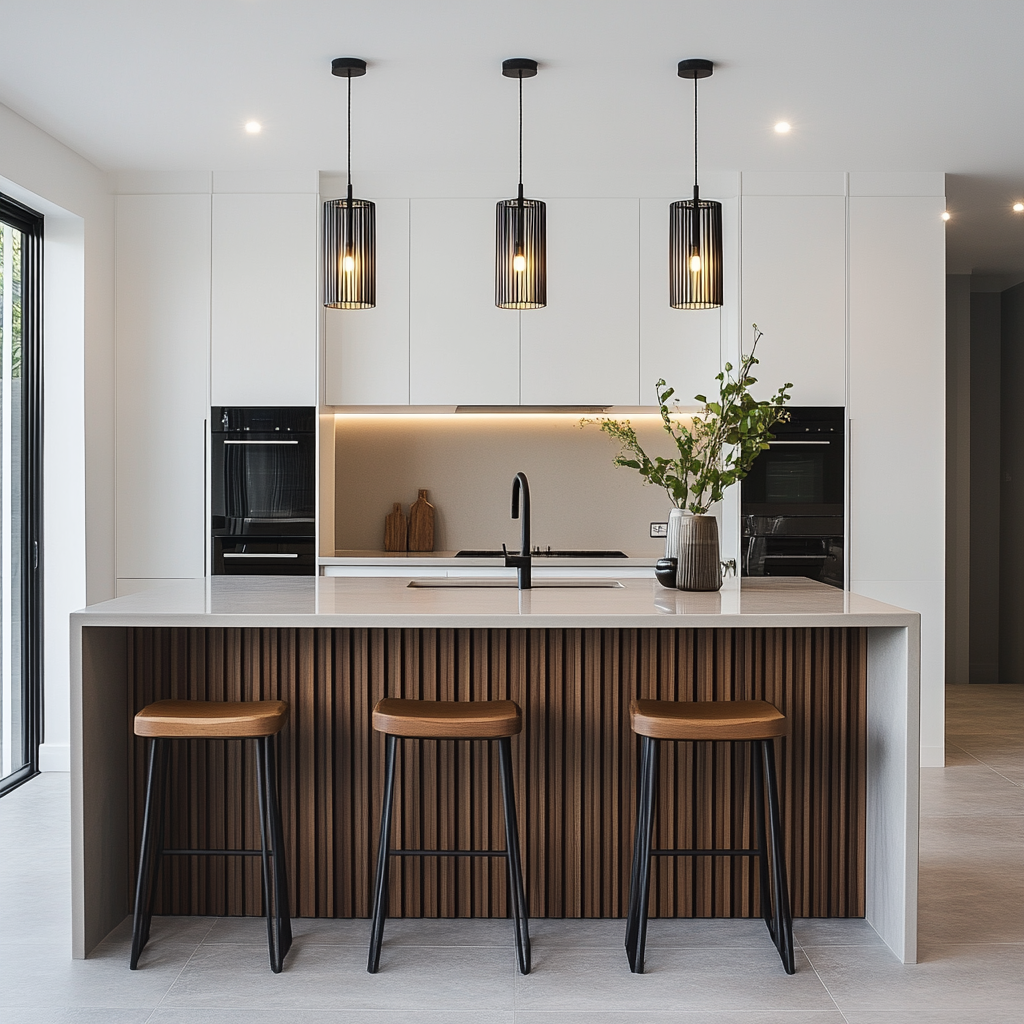
Before you get swept up in the beauty of waterfall countertops, it’s essential to think about the practical aspects of your kitchen design. One common issue is outlet placement. With a traditional island, outlets are typically installed on the side panels of the cabinetry. But with a waterfall design, you lose that space, so you’ll need to find alternative locations for your outlets.
Another factor to consider is seating. While a waterfall countertop can still accommodate an overhang for bar stools, make sure it fits your seating requirements and allows for comfortable dining or working space.
Need to refresh your interiors?
Material Compatibility: Picking the Right Fit for Your Lifestyle

While the beauty of waterfall countertops is undeniable, the material you choose needs to match your lifestyle. If you opt for natural stone, like marble, be aware that it requires regular sealing and maintenance to keep it looking its best. On the other hand, quartz or porcelain are more durable and low-maintenance, making them great choices for busy households. Waterfall countertops are also more exposed to potential bumps, scratches, and spills, so choose a material that can withstand daily wear and tear.
Is a Waterfall Countertop Worth the Investment?

There’s no doubt that waterfall countertops are a high-end addition to any kitchen. They require more material and precision during installation, which can drive up costs. However, their durability and timeless design can make them a smart long-term investment for homeowners looking to create a stylish, functional space. Plus, if you’re planning to sell your home in the future, a waterfall countertop can serve as a major selling point, adding a sense of luxury that’s hard to ignore.
Our Take: Waterfall Countertops Bring Style and Substance
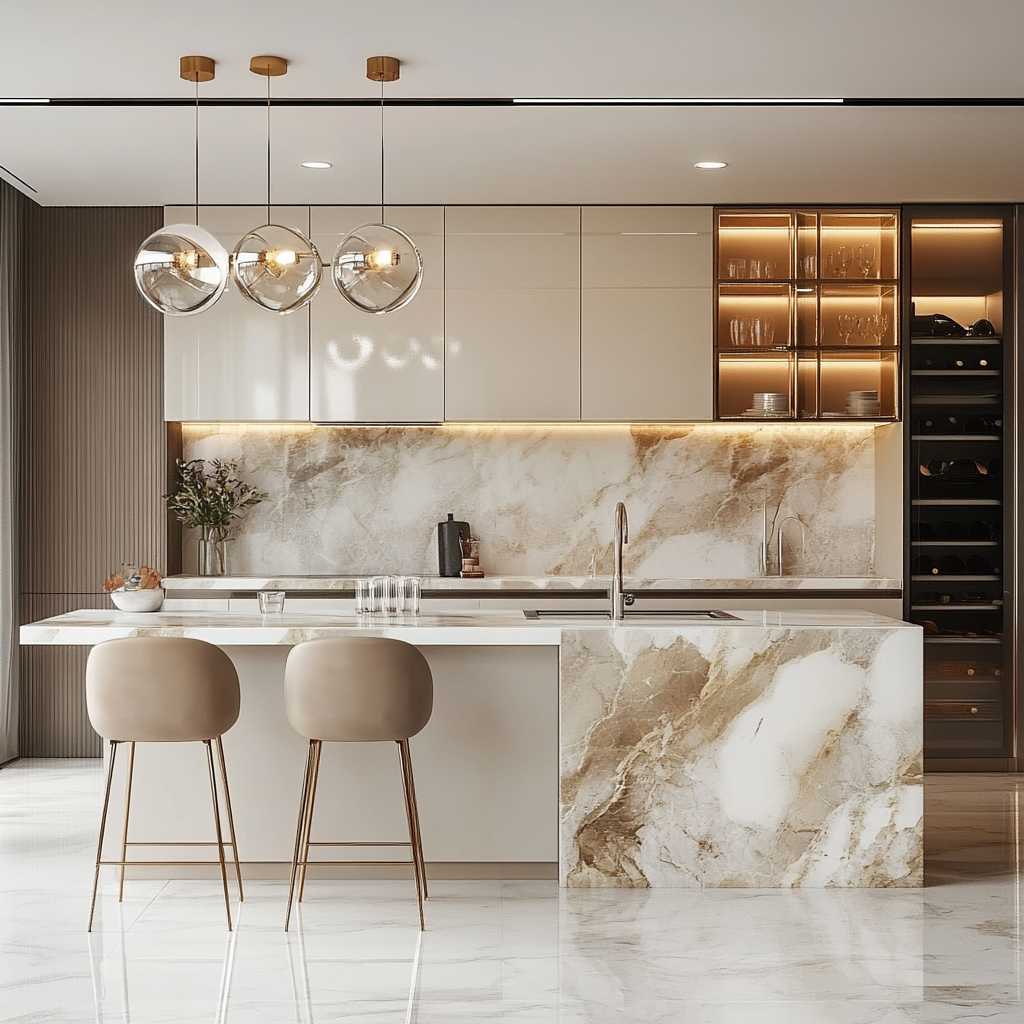
Waterfall countertops are more than just a passing trend—they’re a bold design choice that brings both style and functionality to your kitchen. If you love a modern, sleek aesthetic and want your kitchen to stand out, a waterfall countertop could be the perfect feature. While the upfront cost may be higher, the durability and timeless appeal make it a worthwhile investment for many homeowners.
Want more kitchen design tips and inspiration? Check out our other blog posts on the Homebliss blog, where we cover everything from trendy kitchen ideas to practical home design hacks.


