
Last updated on May 27th, 2026
Most kids’ rooms swing in one direction.

Either they’re fun and full of personality but not great for studying… or they’re neat and functional but feel a little too serious. The sweet spot is somewhere in between.
A well-designed kids’ room should support both—play and focus—without one getting in the way of the other.
Start With Clear Zones
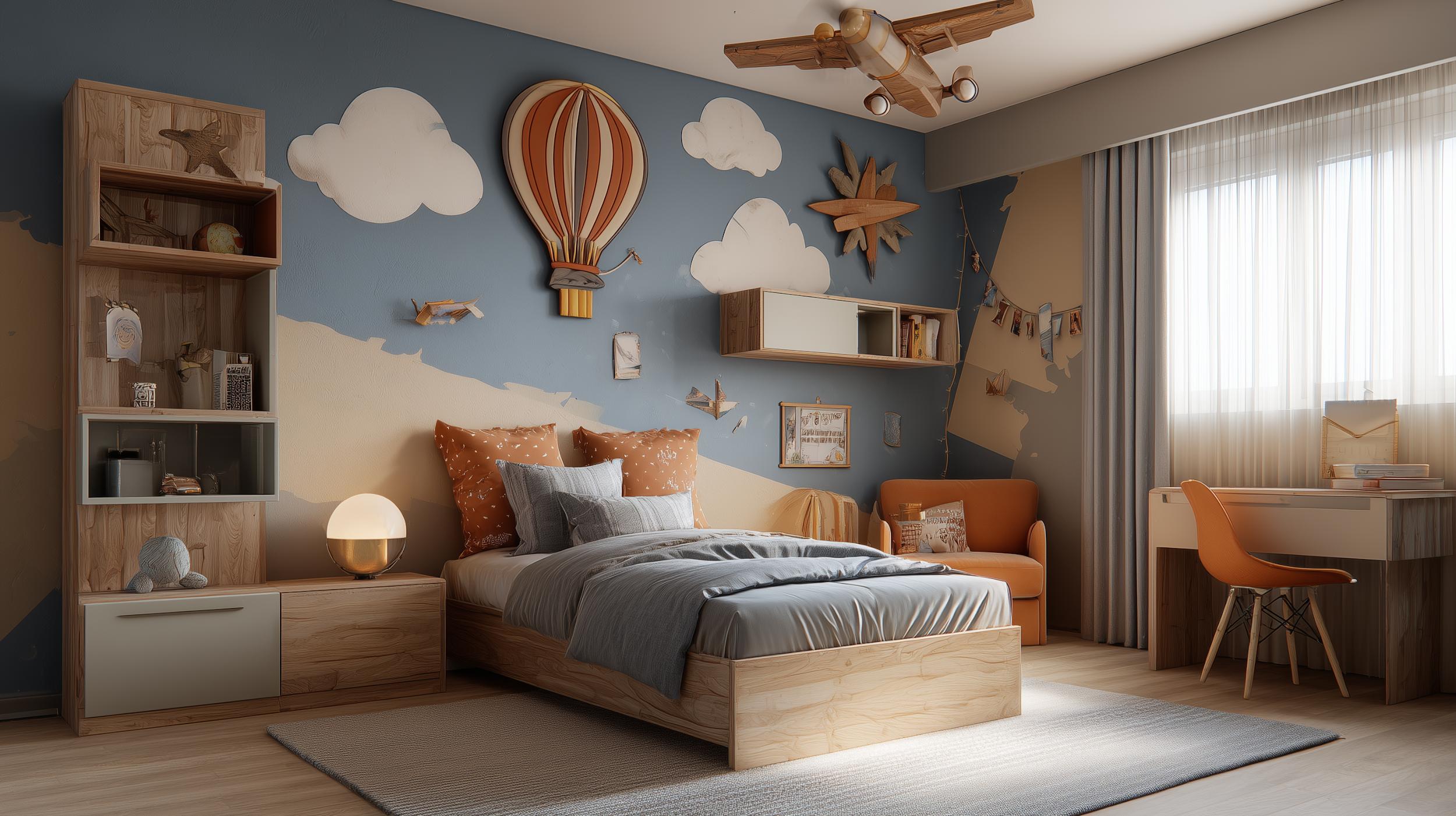
The easiest way to balance things is by creating simple zones. One area for sleeping, one for play, and one for studying. They don’t need walls or partitions, just a clear sense of purpose. Even a small shift in furniture placement can define these areas.
When each zone has a role, it becomes easier for kids to switch between playtime and study time.
Looking to get your interiors done?
Make The Study Area Feel Inviting
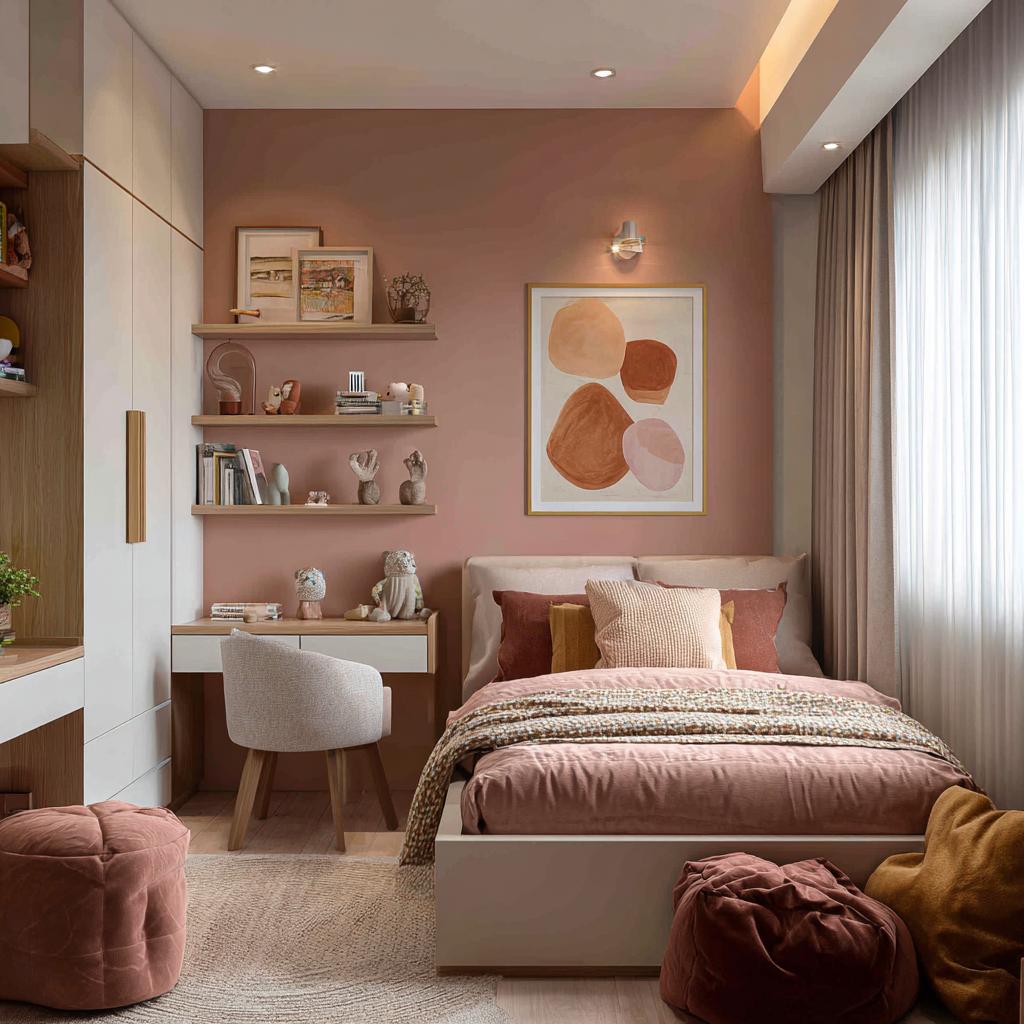
A study corner shouldn’t feel like a punishment. Place the desk near natural light if possible, and keep the setup clean but not boring. A comfortable chair, a soft lamp, and a little bit of color can make a big difference.
When the space feels good, kids are more likely to use it.
Keep Distractions In Check
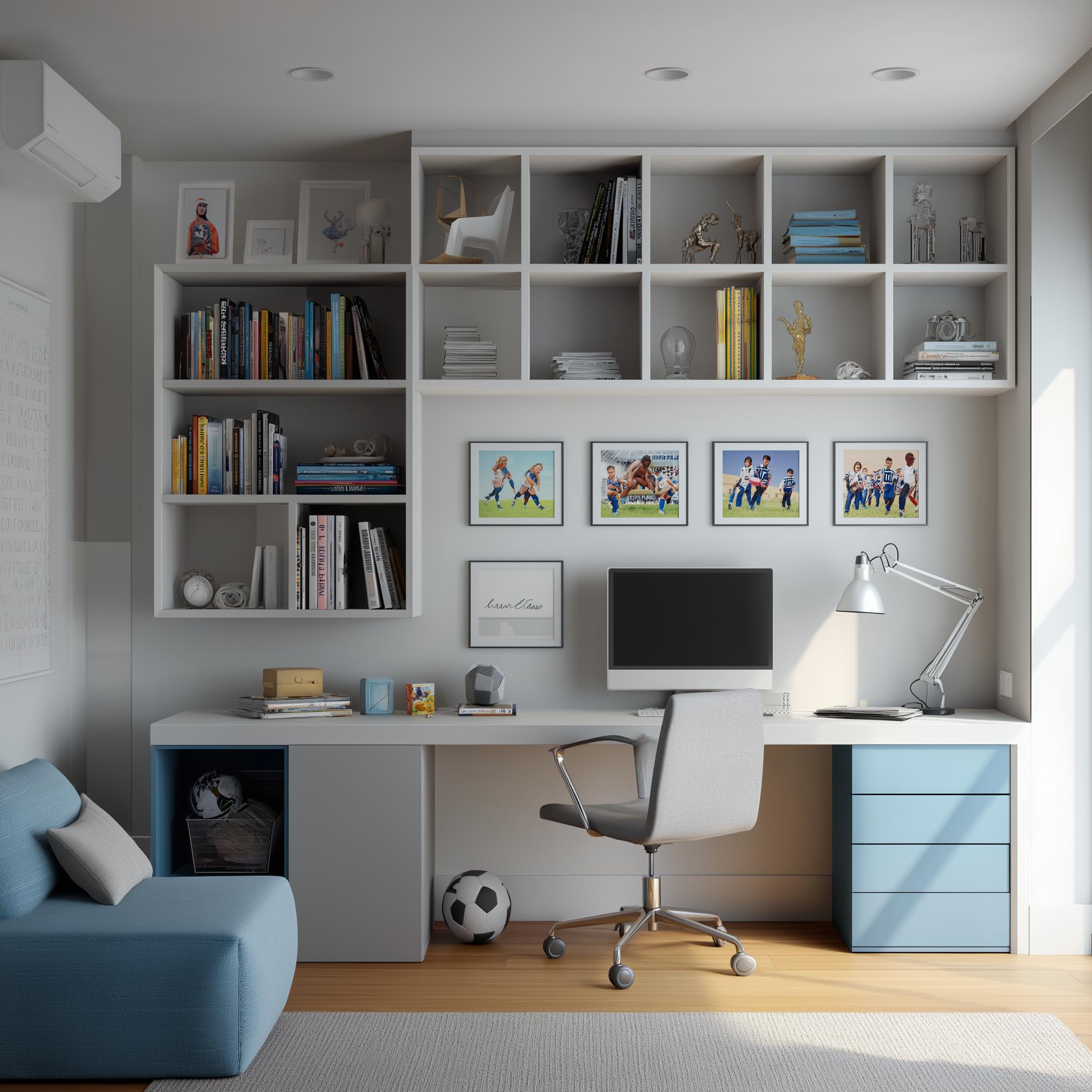
Fun is important—but too much visual distraction near the study area can make focusing harder. Bright toys, busy patterns, or too many elements right around the desk can pull attention away. Keeping the study zone slightly calmer helps create a better environment for concentration.
It’s not about removing fun, just placing it thoughtfully.
Looking to get your interiors done?
Add Storage That’s Easy To Use

Kids won’t use complicated systems. Keep storage simple, accessible, and at their height. Books, stationery, and school items should be easy to reach and just as easy to put back.
When things have a clear place, the room stays organized without constant reminders.
Let The Room Reflect Their Personality

A kids’ room should still feel like theirs! Add colors, artwork, or elements they love—but spread them across the room instead of concentrating everything in one spot. This keeps the space lively without overwhelming it.
The goal is to create a room they enjoy spending time in.
Looking to get your interiors done?
Use Lighting To Set The Mood
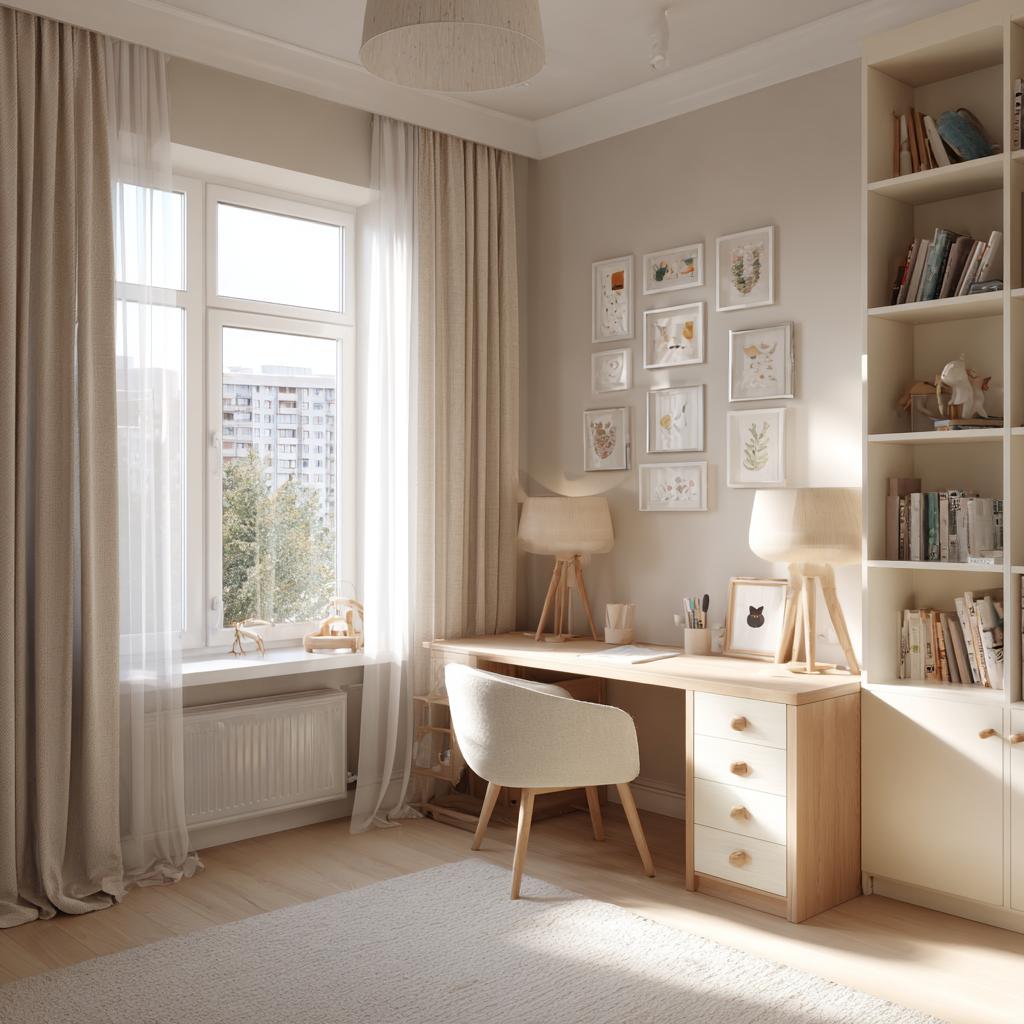
Lighting can help define how the space feels.
A brighter, focused light works for studying, while softer lighting makes the rest of the room feel relaxed. When both are layered well, the room adapts easily to different activities.
Keep It Flexible As They Grow

What works now may not work a few years later. Choose furniture and layouts that can adapt over time. A study desk that grows with them or storage that can be rearranged makes the room more practical in the long run.
It saves you from having to redesign everything too soon.
The Real Balance

A good kids’ room doesn’t force a choice between fun and function. It blends both in a way that feels natural. When the space supports how they play, learn, and relax, it becomes easier for them to move between all three.
At HomeBliss, we believe the best kids’ rooms don’t just look good—they help build habits, creativity, and comfort, all in one space.


