Last updated on October 1st, 2026
Your home office can have the prettiest desk, perfect shelves, and impeccable Zoom background, yet still feel strangely uncomfortable.

Often, the problem is much simpler: the proportions are wrong. A desk that’s too deep for the room, a chair that can’t move freely, or storage that’s just a little too close can make working feel cramped. You don’t need dozens of measurements to fix it. These are the ones worth knowing.
1. Start With A Desk Around 29 To 30 Inches High

Your desk sets the baseline!
A standard desk is typically around 29 to 30 inches (74 to 76 cm) high. Freestanding desks commonly come in depths of around 24, 30, or 36 inches, so choose according to your equipment and available space.
Don’t automatically buy the biggest desk you can squeeze in. You still need enough room around it to move comfortably.
Looking to get your interiors done?
2. Give Your Chair Room To Move
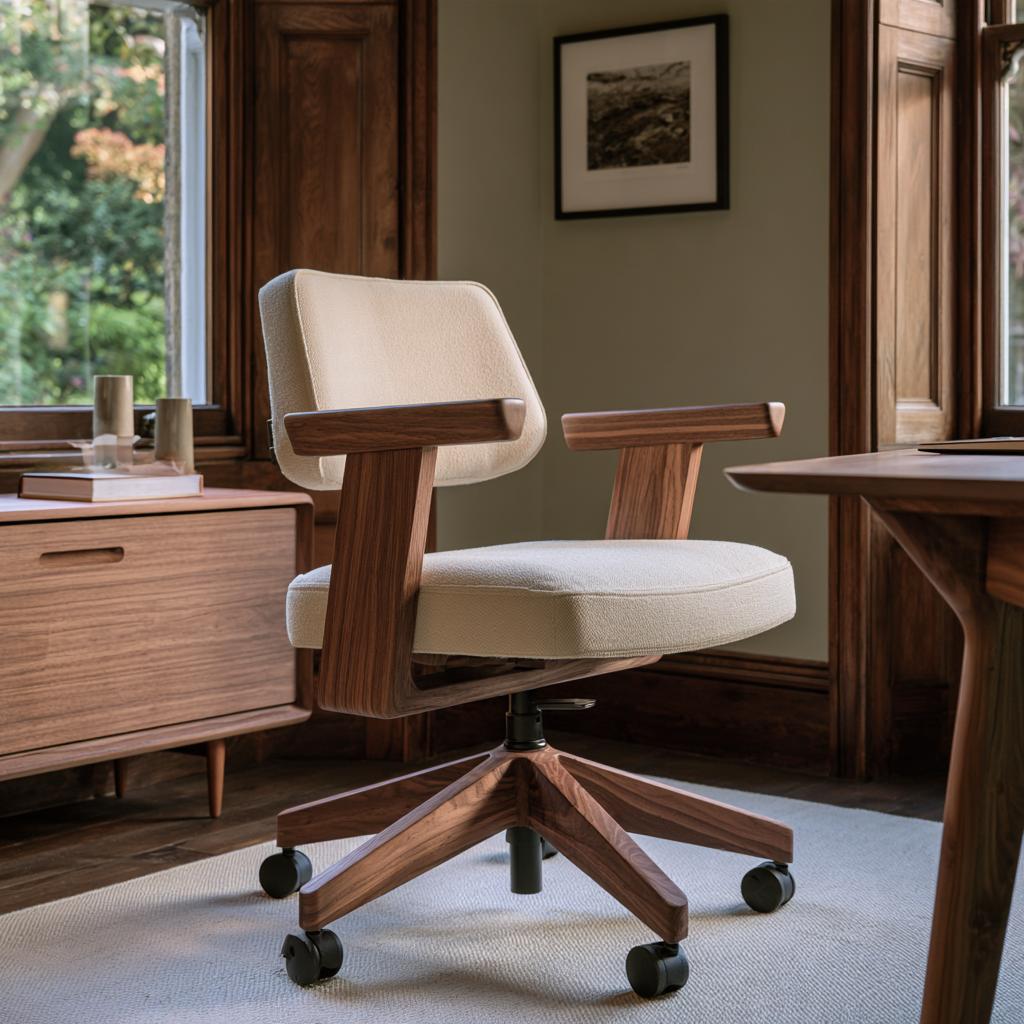
Don’t measure the desk and forget the human!
This is one of the easiest home-office mistakes to make. Your chair needs space to pull back, swivel, and move from side to side.
As a useful planning reference, allow roughly 42 inches (107 cm) square for chair movement in front of the workstation, adjusting for the chair and user.
A gorgeous desk isn’t much fun when getting out of it requires gymnastics.
3. Leave Breathing Room Behind The Desk
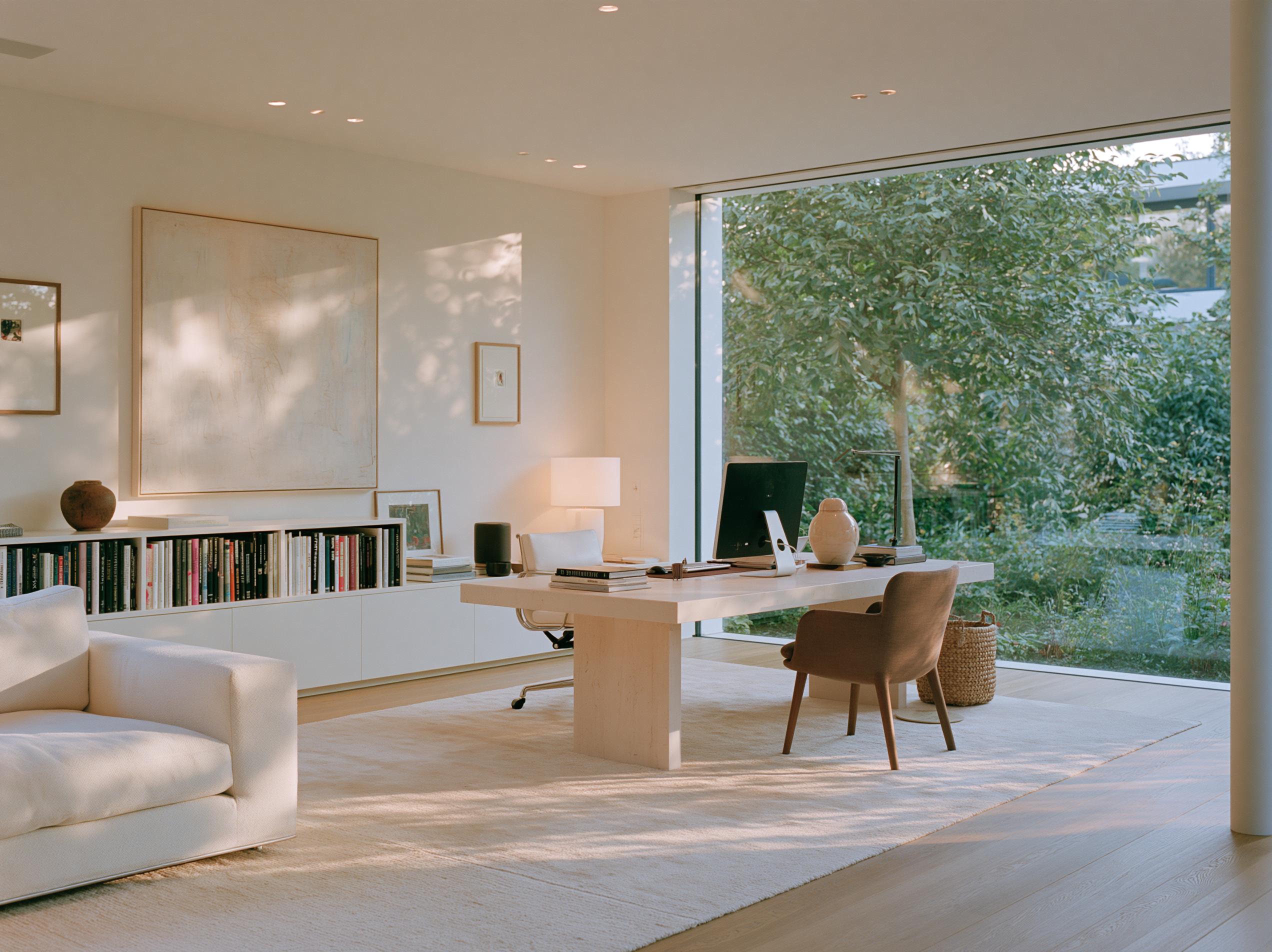
A walkway shouldn’t become a squeeze-way!
If you have a desk floating in the room with storage behind it, aim for around 30 inches (76 cm) between the desk and credenza as a useful starting point.
Need room for visitors and additional chairs on the other side? You’ll need considerably more clearance. Measure the room after allowing for movement, not before.
Looking to get your interiors done?
4. Planning Two Desks? Measure Between Them
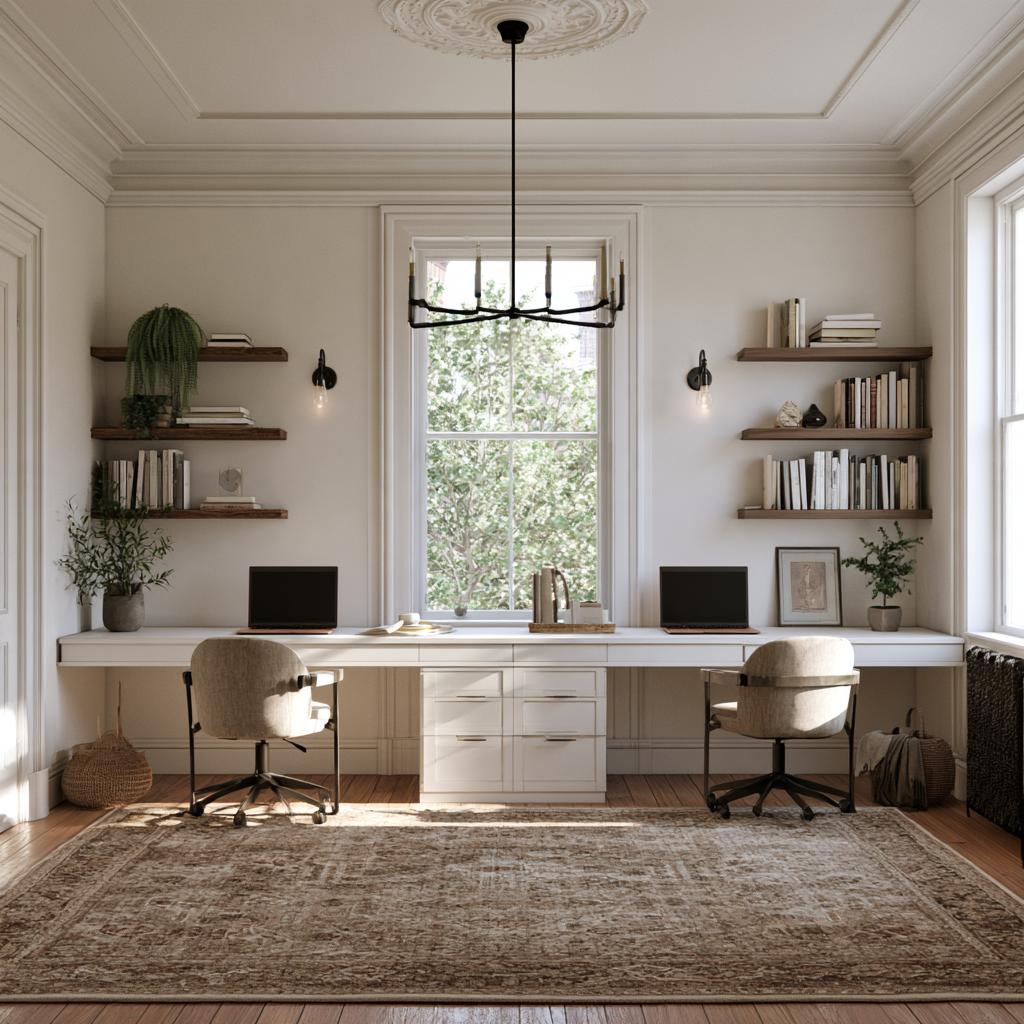
Two people need two escape routes!
For desks positioned on opposite walls, around 54 to 66 inches (137 to 168 cm) between them provides space for chairs to move and people to pass without constantly bumping into each other.
If your room can’t manage that comfortably, side-by-side desks or a shared work surface may make better use of the available space.
5. Don’t Forget The Printer’s Moving Parts

The printer needs elbow room too!
It’s easy to measure the printer itself and design a perfectly snug shelf around it. Then you discover the paper tray won’t open.
As a reference, allow a footprint of at least 18 by 24 inches (46 by 61 cm) for a printer, but check your actual model. More importantly, leave clearance wherever trays, lids, cartridges, or paper feeds need to open.
6. Give Shelves Enough Depth, Not Too Much

Storage shouldn’t steal the room!
Office shelves are commonly around 12 inches (30 cm) deep, which is sufficient for many books, files, and supplies without creating unnecessarily bulky storage.
In a compact office, that matters. Going deeper everywhere can gradually eat into your usable floor area.
Looking to get your interiors done?
7. Measure Drawers When They’re Open

Closed dimensions only tell half the story!
Filing cabinets and desk drawers need room in front of them too. A cabinet might technically fit between your desk and wall, but that doesn’t help if you can’t fully extend the drawers.
Plan storage around how it functions when open, and make sure it doesn’t interfere with your chair or circulation route.
You Don’t Need A Whole Room

A comfortable home office doesn’t necessarily require a dedicated room. A well-planned desk can work on a landing, in a bedroom corner, or along an unused wall if its footprint and circulation suit the way you work.
Measure the work zone, not the room label!
The Real Measurement That Matters
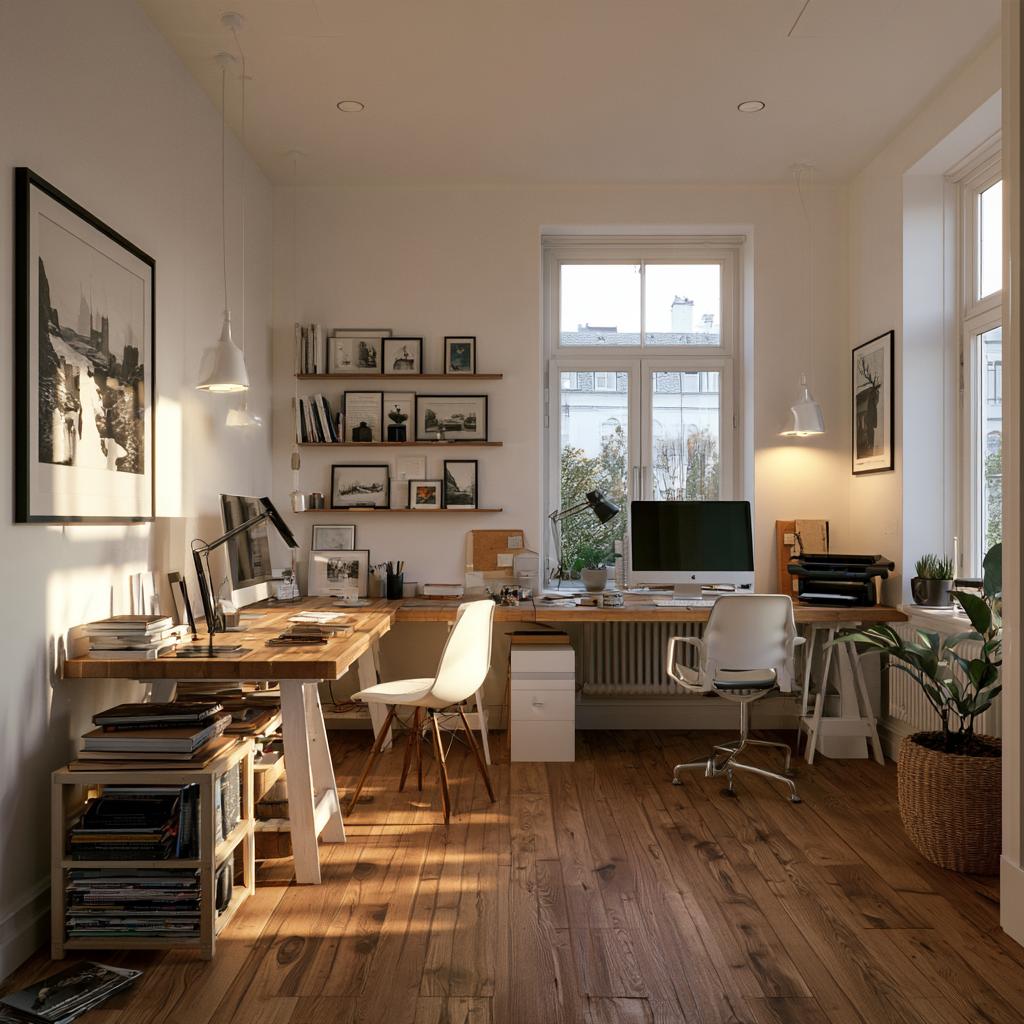
There isn’t one perfect home-office dimension for everyone. Your height, chair, equipment, storage requirements, and working habits all matter.
The trick is to measure the space you need to work and move, not simply the furniture you want to fit. Get those few dimensions right and even a compact home office can suddenly feel far more comfortable.
At HomeBliss, we love design details that make everyday spaces work better. Keep exploring the HomeBliss blog for clever home-office ideas, practical measurements, and smart ways to make every square foot work beautifully.


