
Last updated on February 9th, 2024
Cooking isn’t a chore many of us relish. However, things get worse when there just isn’t enough room on the countertop for your chopping and prep work. And do we even want to talk about the clutter of dirty dishes? But hey, put your worries away. Interior designers have remedies for most kitchen dilemmas.

And why not? They cook and eat too! So, what’s the solution? Enter the wet-dry kitchen concept. Confused? Let’s find out what designers have come up with to solve this perineal problem.
What Is the Wet-Dry Kitchen Concept?

Before we define this thought process, let’s check out the scenario in most households. We spend oodles on a magnificent kitchen interior. But, maintaining a pristine appearance is challenging, especially when you have your curry, dal, and rotis vying for attention on the countertop. Face it, clutter and gorgeous kitchen layouts don’t go hand in hand. So, what is the wet-dry concept?
In essence, it means sectioning the area where the cooking activity takes place. With the wet cooking area sectioned off, the rest of the space is open for light cooking. This is a great way to keep the clutter of unwashed dishes and cooking hidden from view. A must for Indian kitchens where we need a lot of oil and masalas.
How Do You Work Out the Logistics?

The wet area:
The wet areas will include elements such as the sink, stove, oven, dishwasher, and microwave. You will need space for your prep work and enough ventilation to clear the fumes and odors. A chimney above your stove would be a blessing. You can keep your windows open to air the space when required.
The dry area:
You don’t need as much space in the dry area. This space is used for light cooking, such as sandwiches or smoothies. At best, there will be a chopping board or a few fruits and vegetables on your countertop. As this area will be open to view, let it blend seamlessly with the living room decor.
The dry area will also need cabinets to store dry ingredients, light cookware, and a fridge if possible. A sink would be a convenient addition, too, so that you don’t have to go to the sectioned wet area to wash your veggies. With your cooking paraphernalia hidden from sight, you can safely host parties either in your dry area island or the living area.
Looking to get your interiors done? Here's help!
How to Nail Your Wet/Dry Kitchen Arrangement
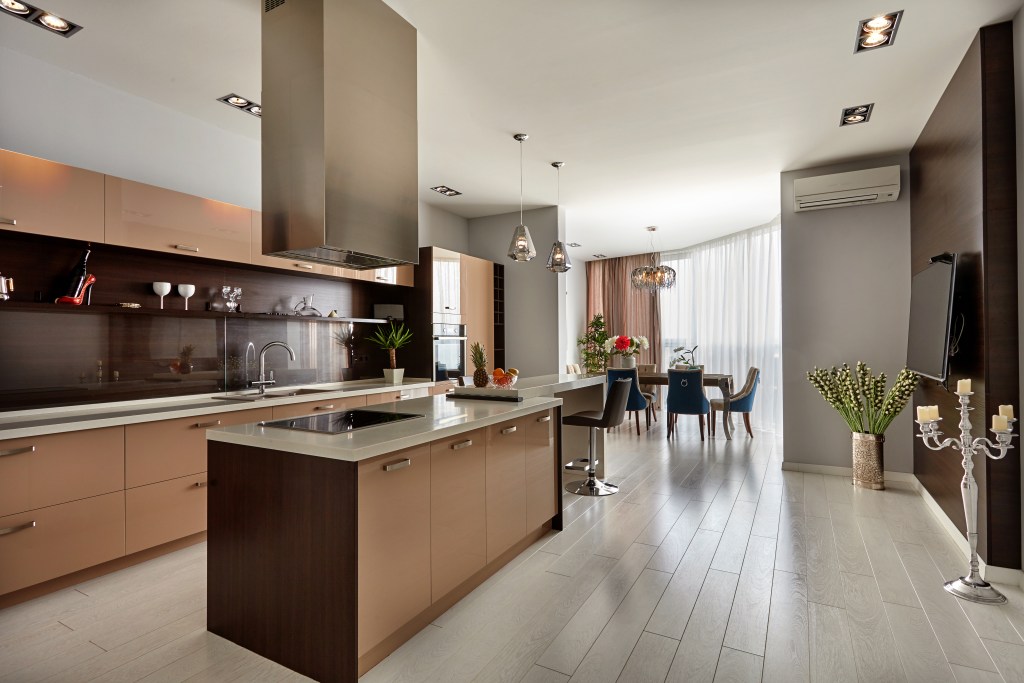
Knocking a beautifully functional wet/dry kitchen into shape isn’t a layman’s job. Innumerable elements have to be worked into the design. One false move, and your kitchen design will come crumbling down faster than a house of cards. Remember, while it is a simple matter to segregate your areas, you still have to work on the plumbing, the electric outlets, etc. And hey, if you don’t want to partition off the area, you can use vertical storage cabinets to give you a modicum of privacy in your wet kitchen. That said, let’s take each element one at a time for better understanding:
The fridge:
Ideally, the fridge will be placed in the dry area, as you will need it for salads and fruits. The other option is to install a mini fridge in the dry area and let the fridge take residence in a wet kitchen.
The sink:
When you are cooking, a convenient water supply is essential. What’s more, a clutter of dishes open to view isn’t the look you want in a dry kitchen. To solve this problem, you can let a large sink with a drainboard rest in the wet kitchen and install a smaller one in the dry area.
Summing Up
Sectioning off your wet space from your dry space will take some doing, especially if you are short on space. We suggest you consult a professional to get the most out of your space. Homebliss.in is one of the most popular home design websites in the country and your best bet if you want good home decor advice. Log in and find out more.


